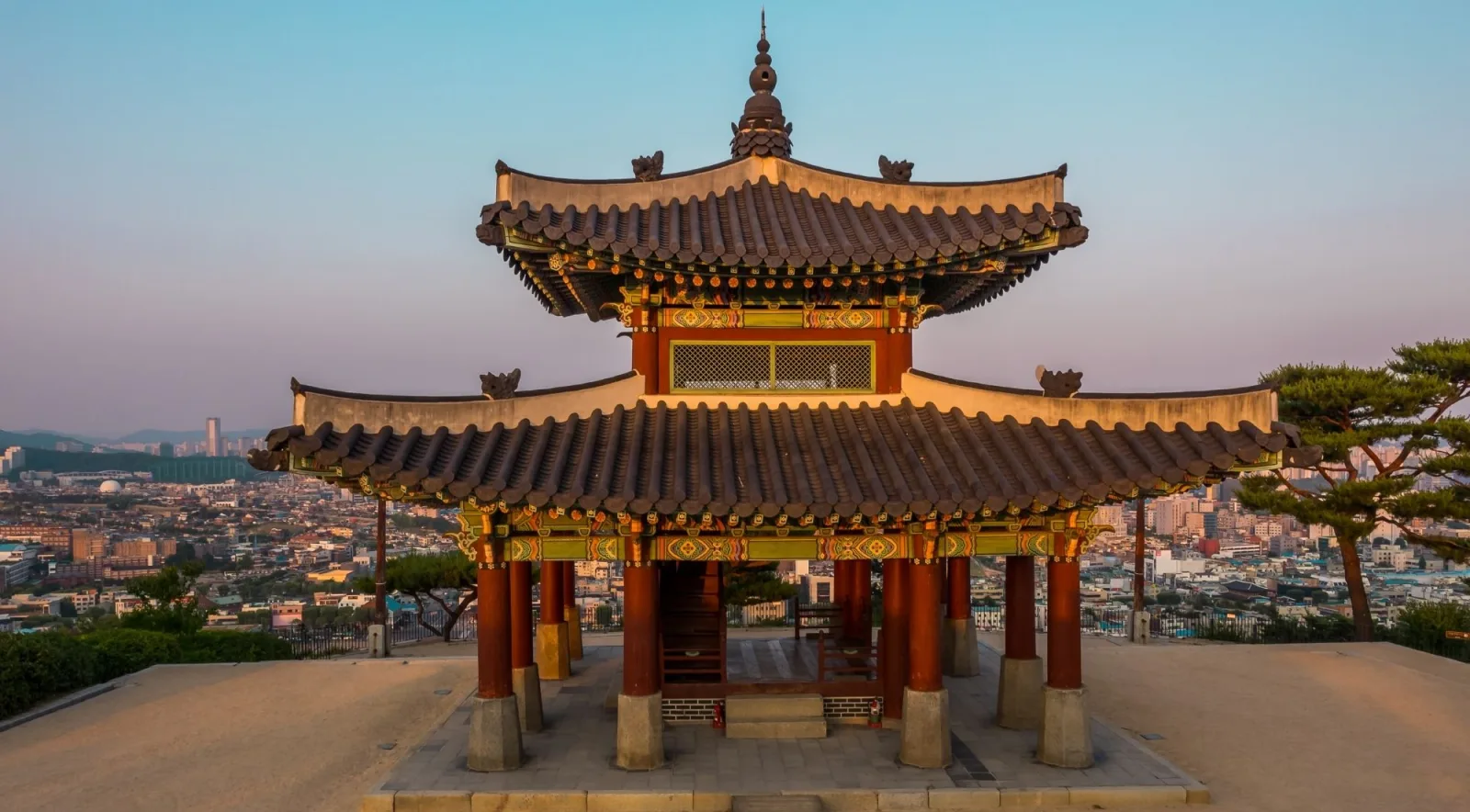
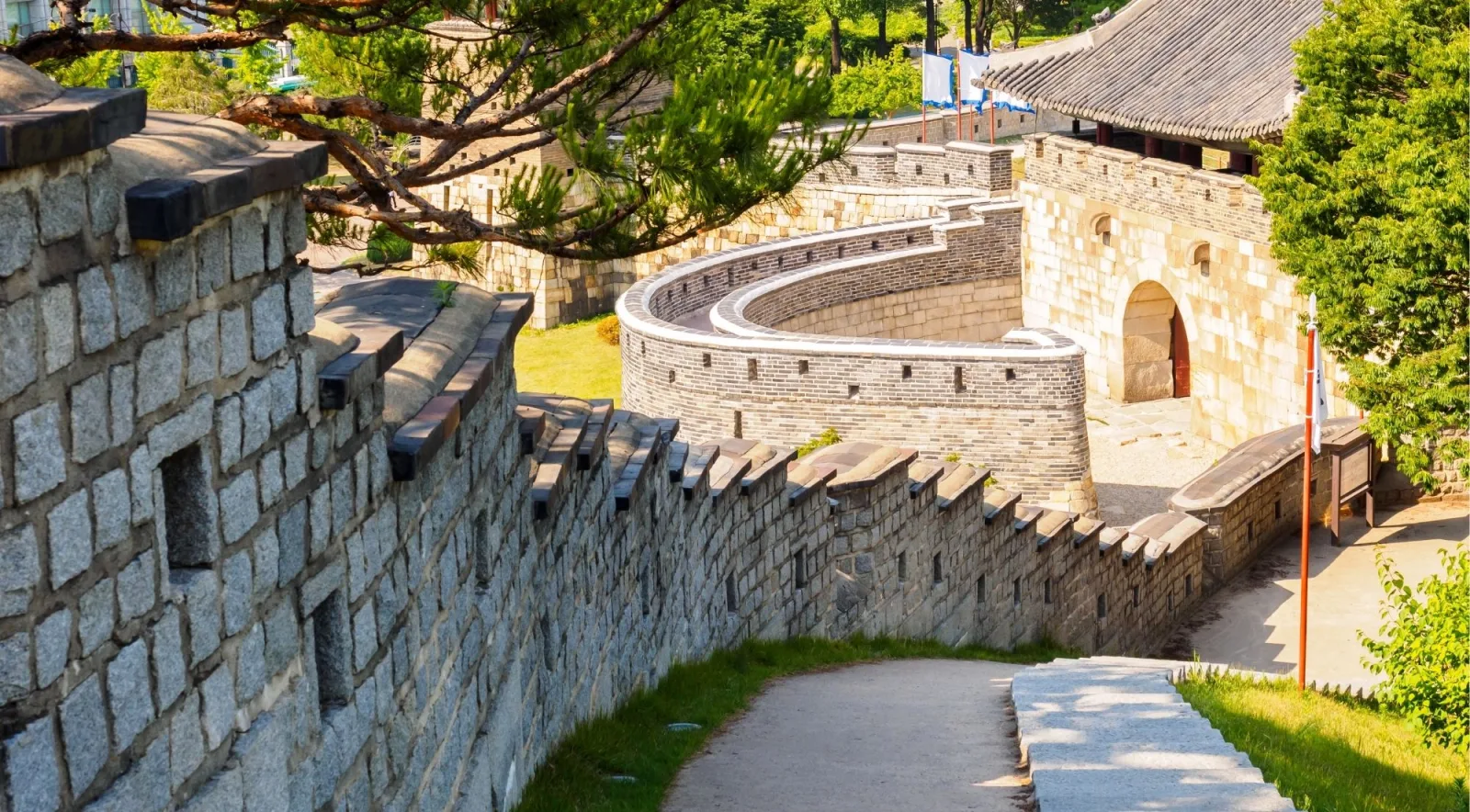
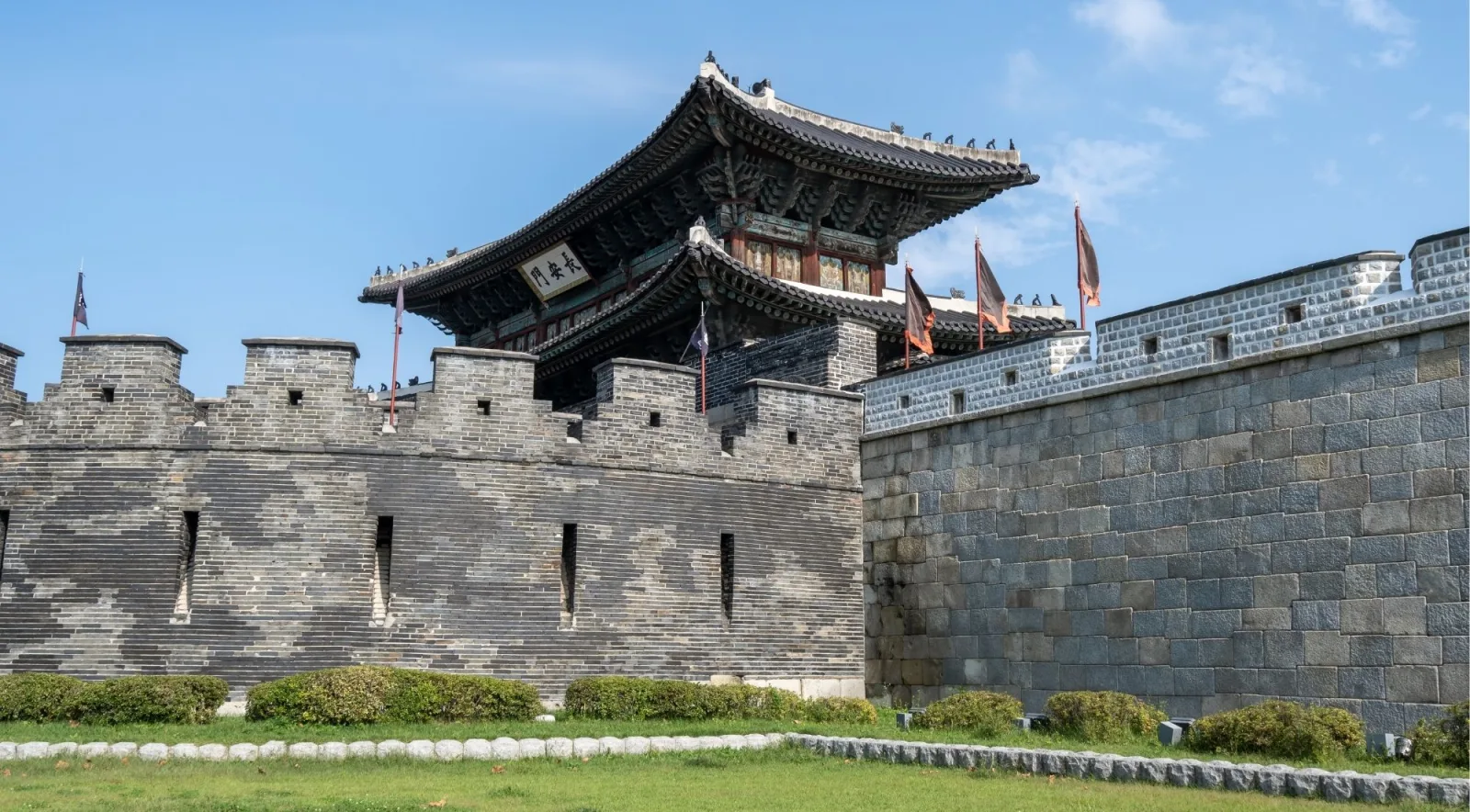
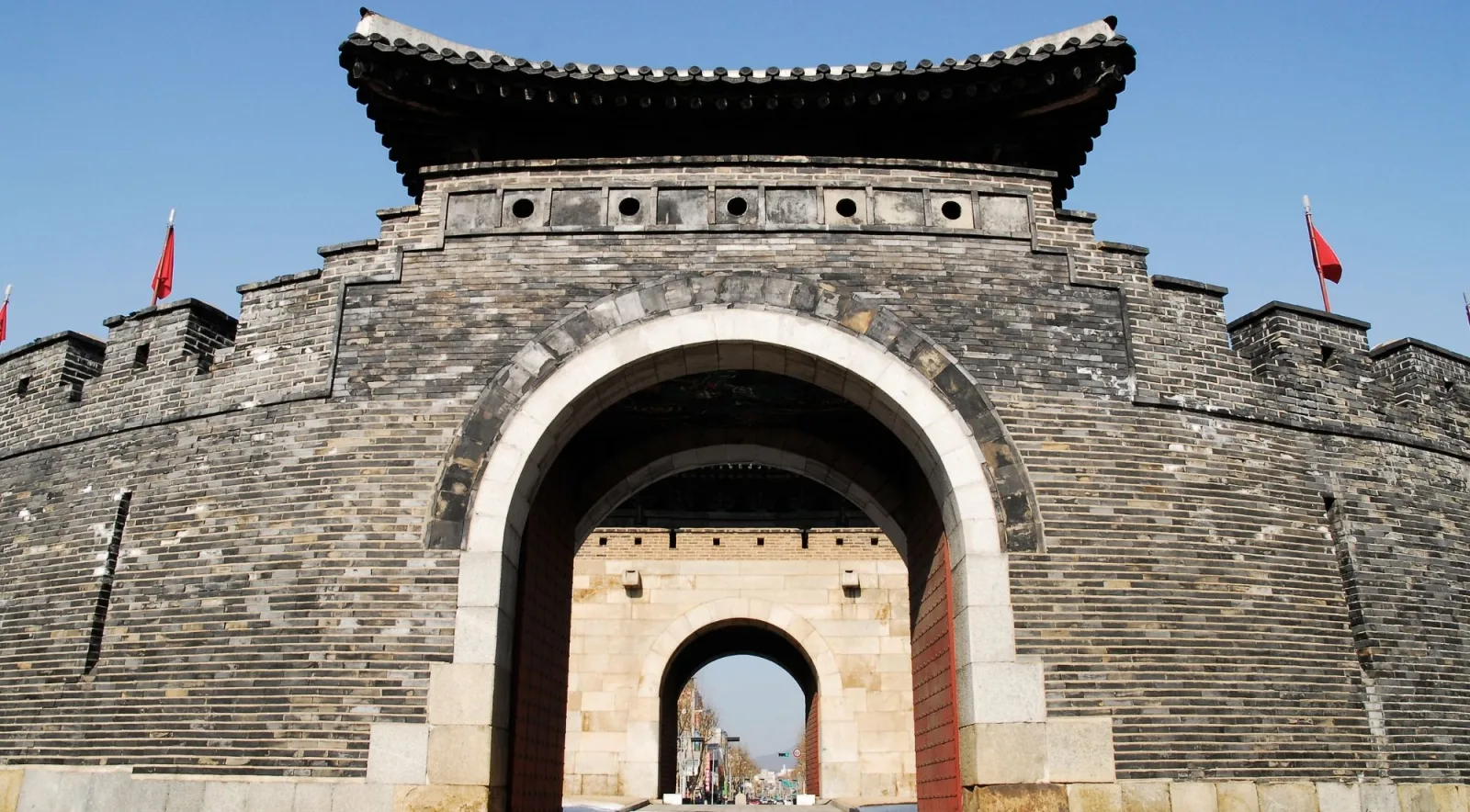
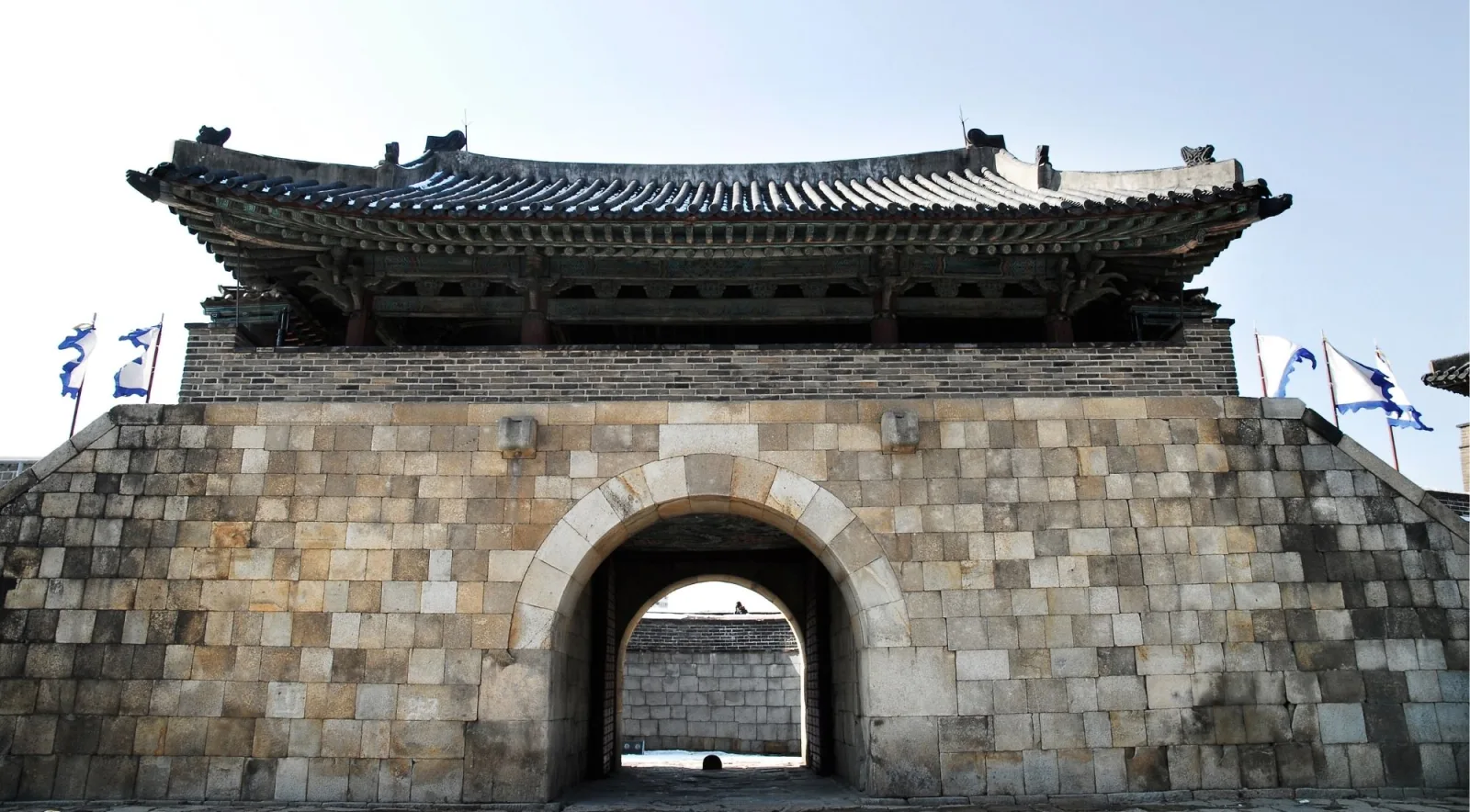
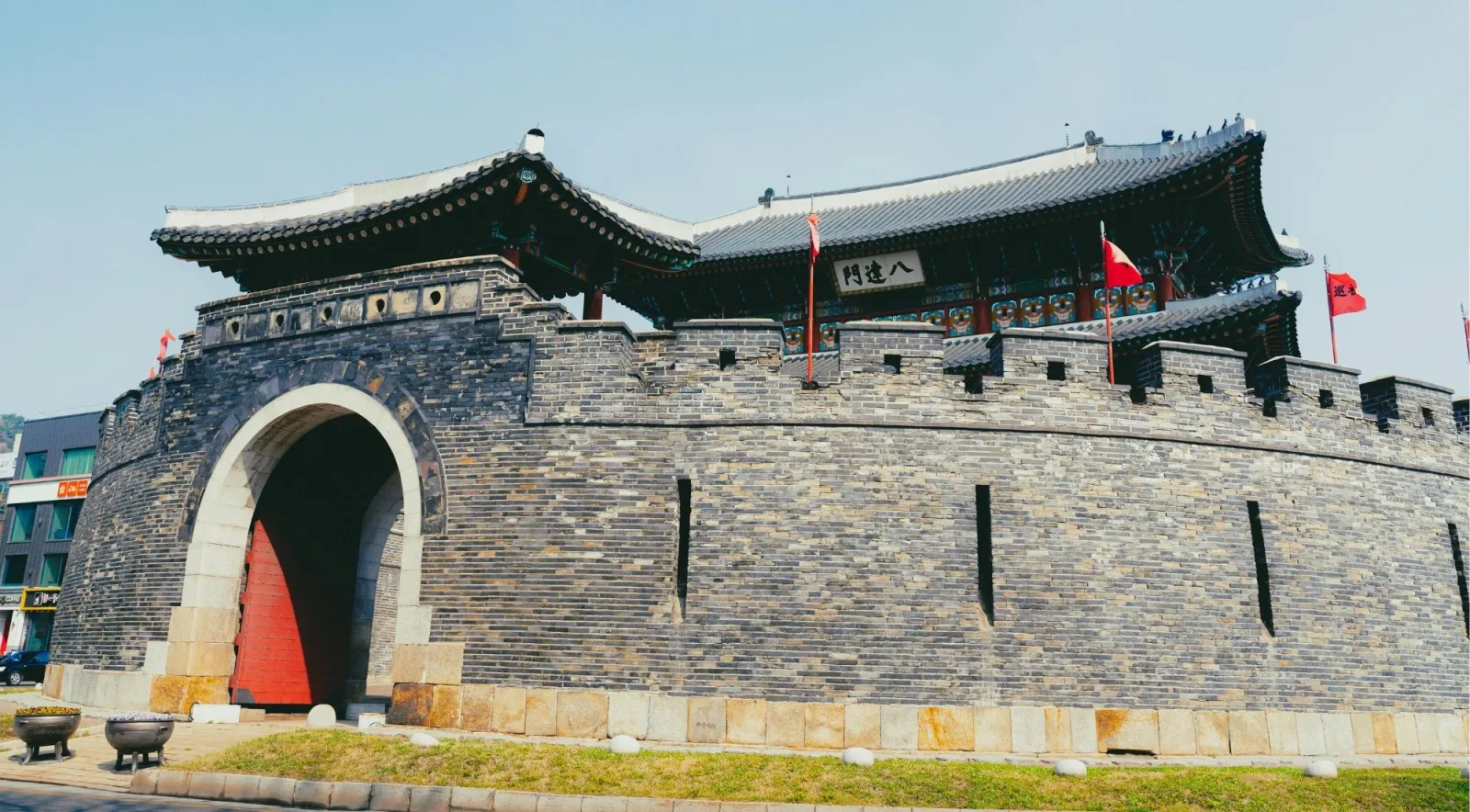
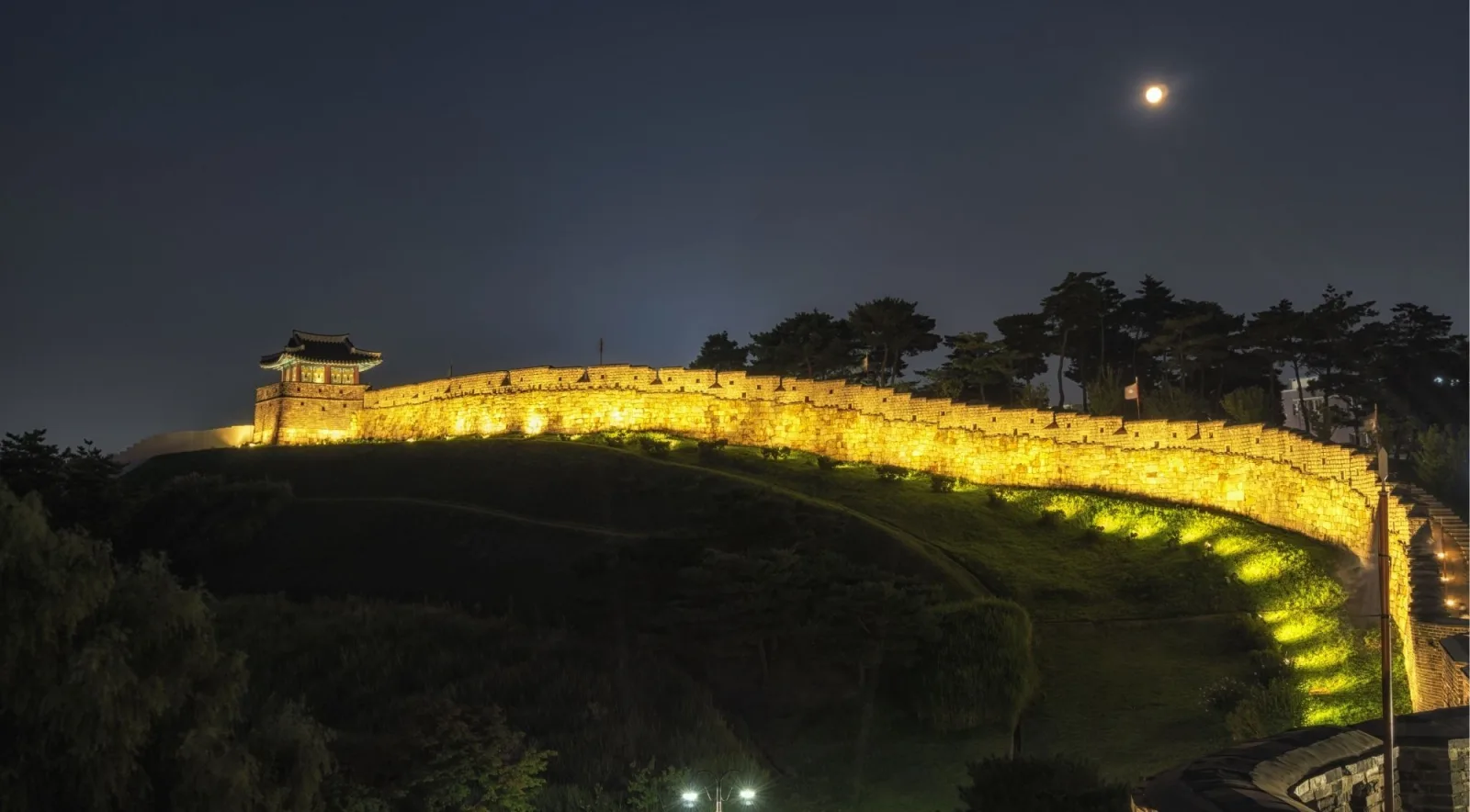
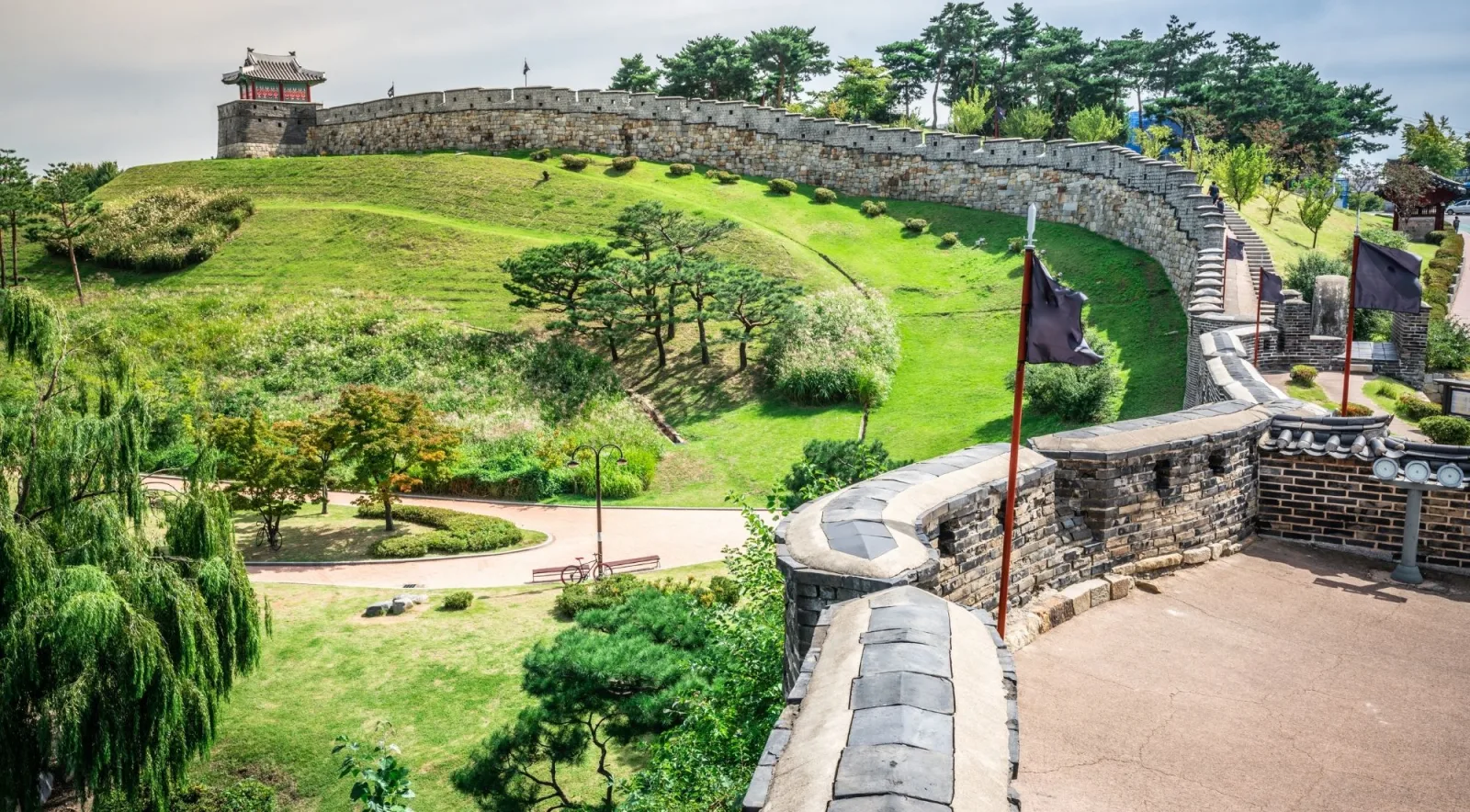
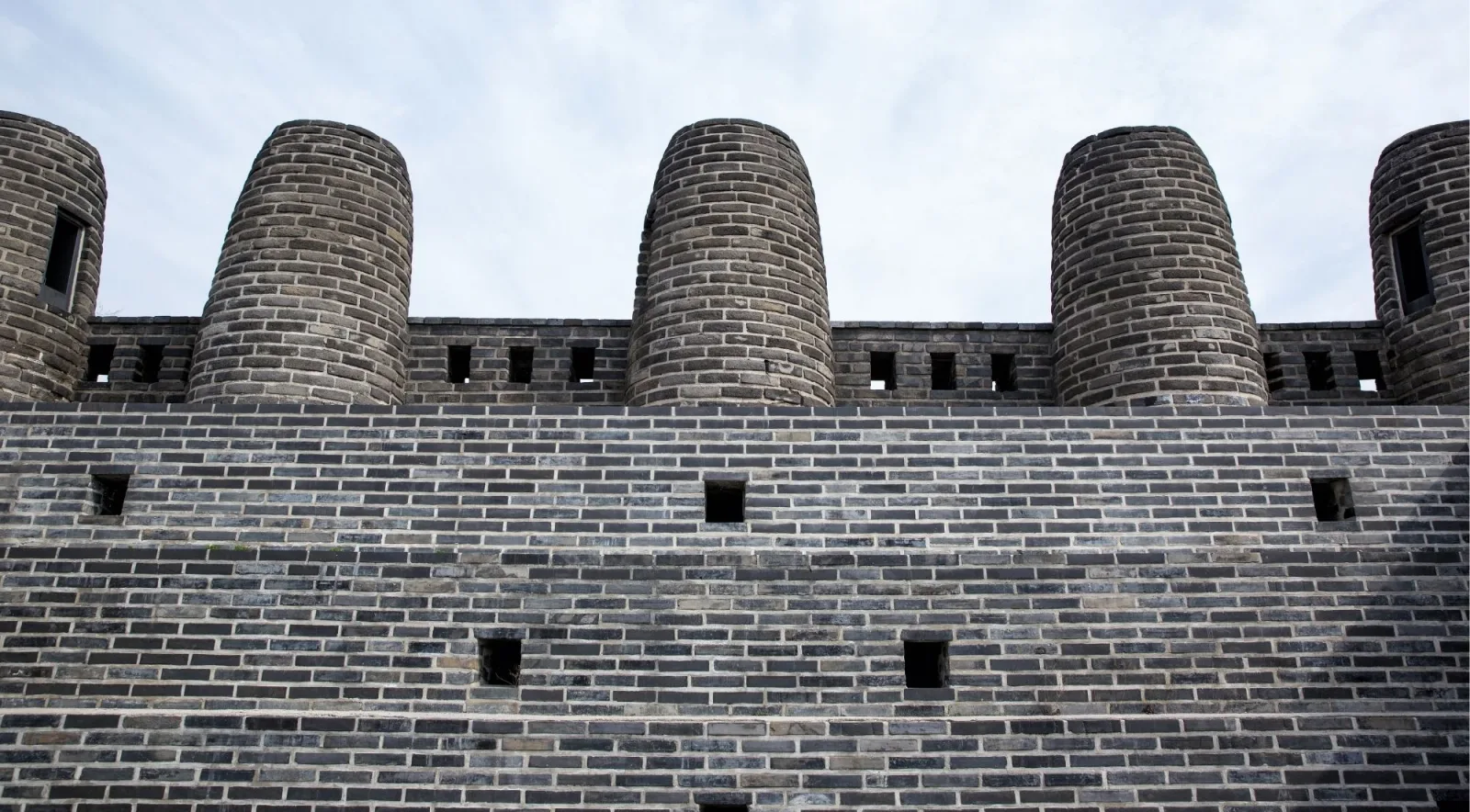
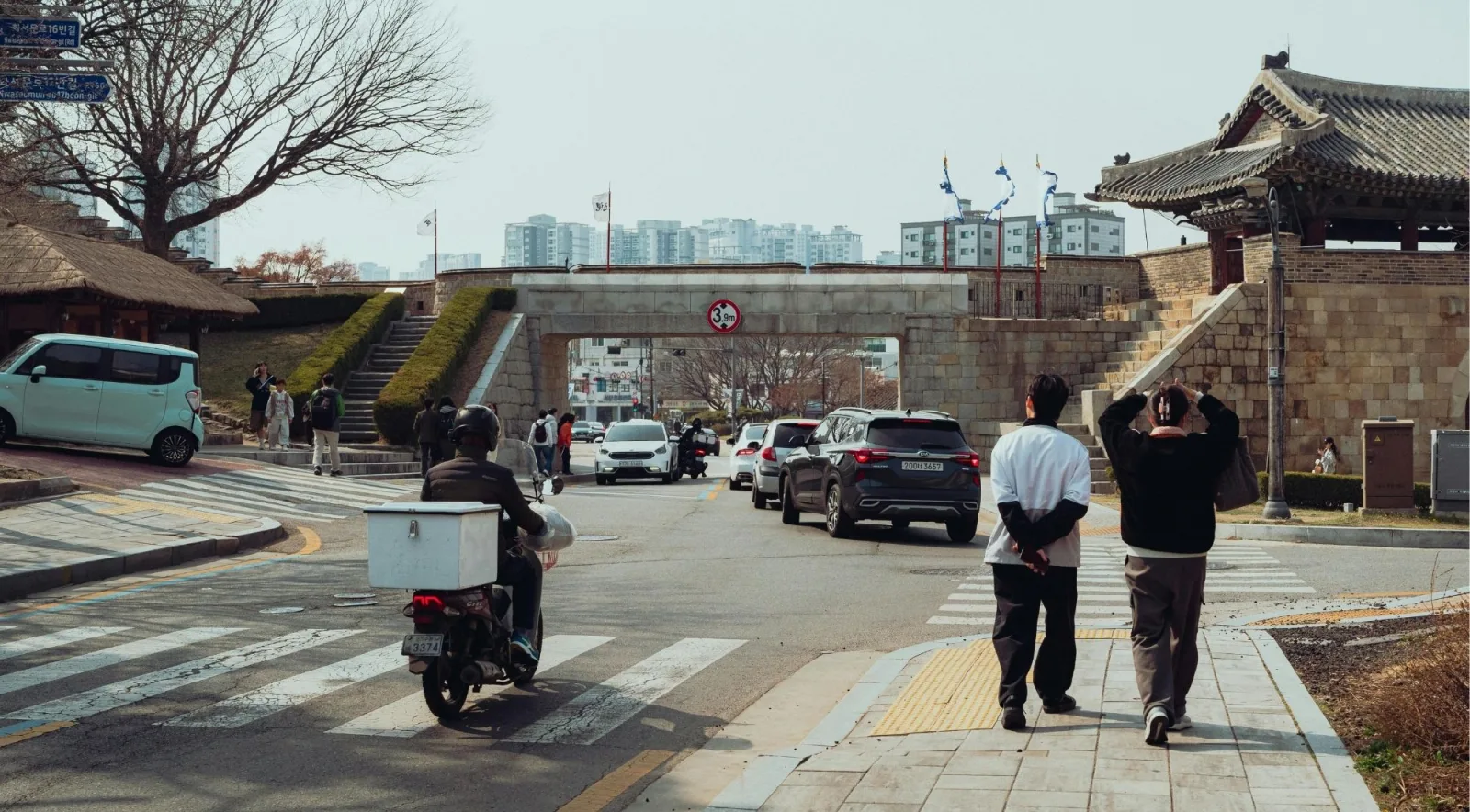
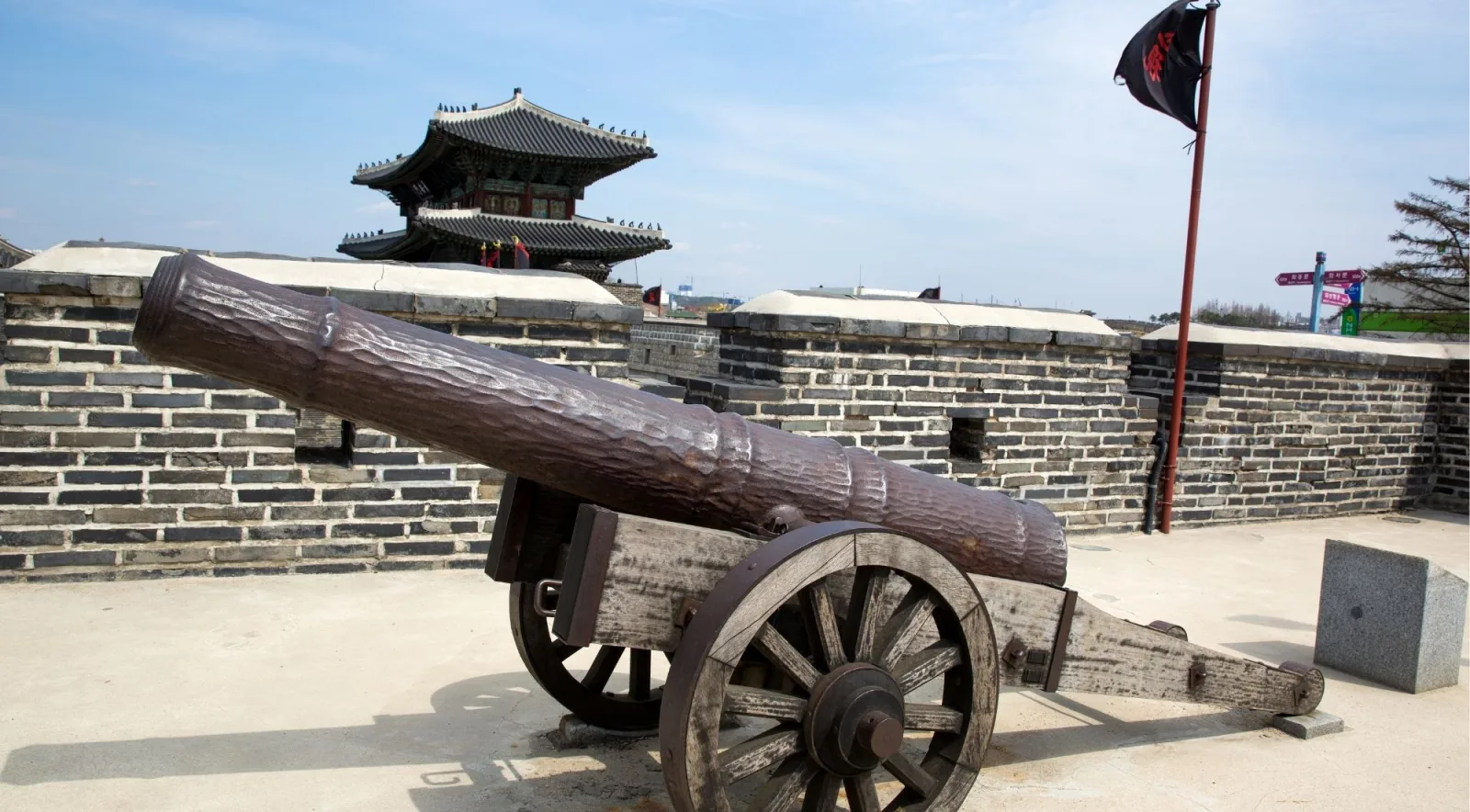
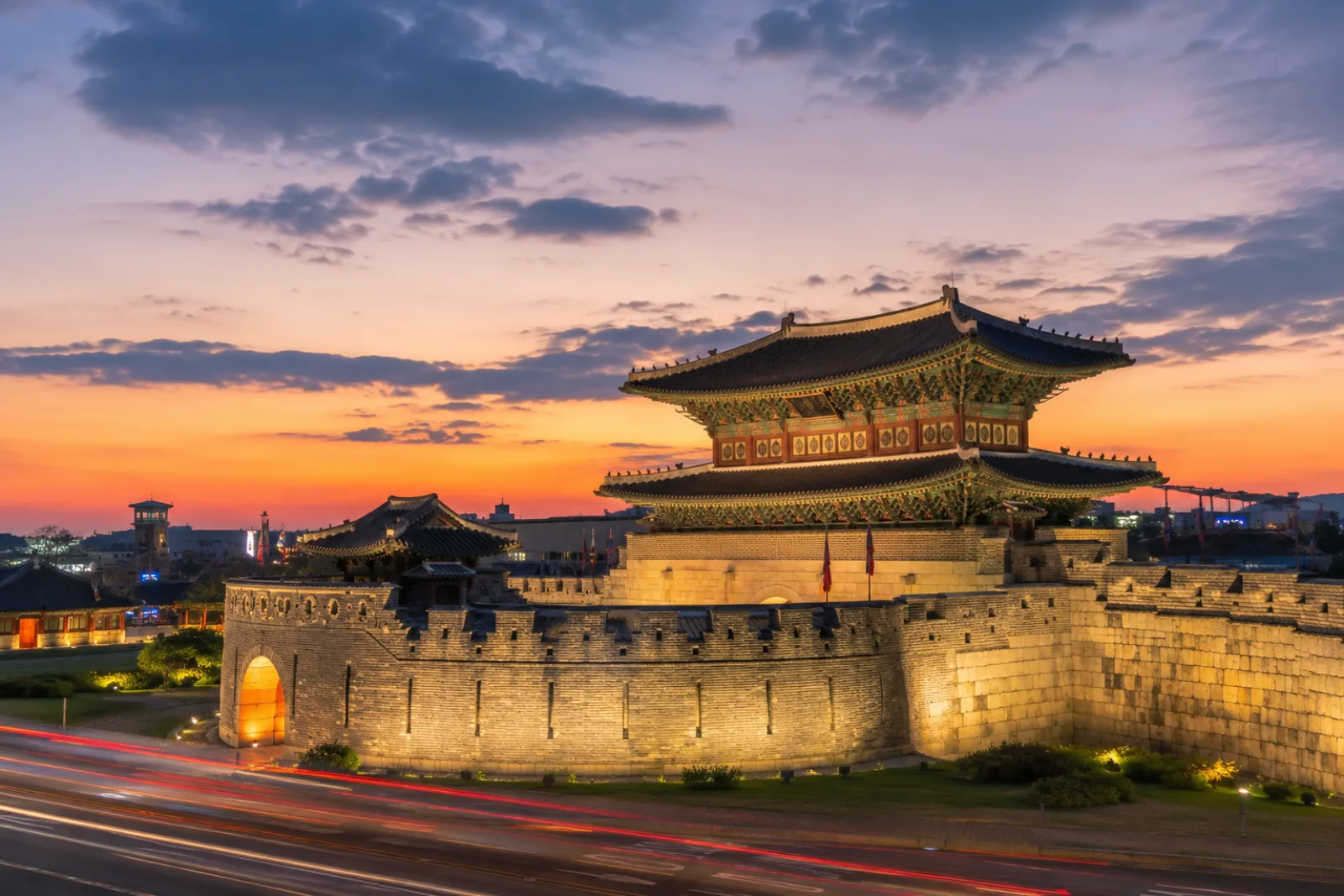
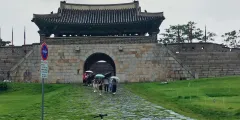
Start here, because it saves most people a search: you do not need an entrance ticket for Hwaseong Fortress itself. The fortress walls are free to visit. The rampart path is a public route, open year-round and around the clock, with no gate, no turnstile and no opening hours. That is why a night visit is possible at all.
What is ticketed is a small set of things inside and around the walls, and most of them are optional.
Every fee at Suwon Hwaseong
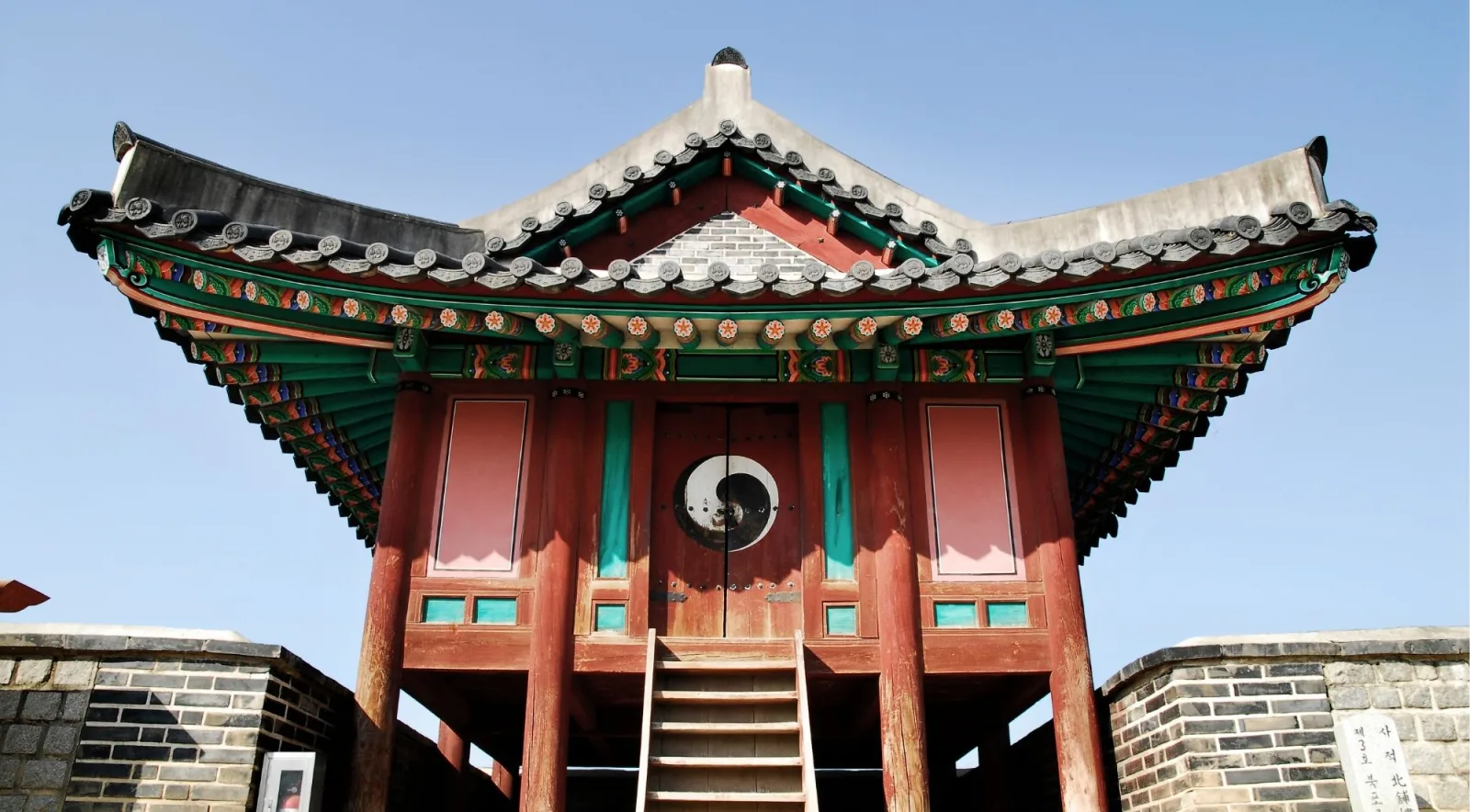
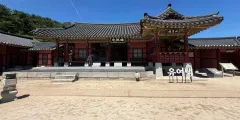
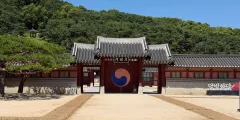
Hwaseong Haenggung Palace — ₩2,000 adults. The temporary royal palace King Jeongjo used when he travelled from Seoul to his father’s tomb, and the largest surviving example of its kind from the Joseon dynasty. Teenagers ₩1,500, children ₩1,000; group rates apply from 20 people. Open 09:00–18:00 from March to October and 09:00–17:00 from November to February, all year. This is the only substantial paid attraction on the fortress site and it is worth the ₩2,000 several times over.
Hwaseong Fortress tourist trolley — around ₩6,000 adults. A wheeled trolley styled after a Joseon royal carriage that loops the main sights in about 40–50 minutes, with an audio guide in English, Chinese and Japanese through a headphone jack at each seat. Reserve online; it sells out on good weekends. Worth it if the climb up Paldalsan does not appeal.
Traditional archery — around ₩2,000 for ten arrows. At the range near Changnyongmun, the east gate. Cheap, genuinely fun, and the closest you will get to using the fortress as it was designed to be used.
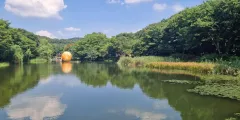
Flying Suwon balloon — around ₩20,000. A tethered helium balloon that rises about 150 metres for a panoramic view over the fortress and the city. The best overview you can get without a drone, weather permitting.
Suwon Hwaseong Museum and the Fortress Museum. Modest admission, and the place where the engineering is explained — the lifting cranes, the beacon system, the construction ledger. Only one tour on this site includes them.
Korean Folk Village — ₩37,000 adults on weekdays, ₩39,000 at weekends, ₩22,000 for foreign visitors with a passport. The foreigner rate is listed as valid through 2026; children from 36 months through primary school pay ₩30,000 or ₩32,000. Not on the fortress site at all; it is in Yongin, thirty minutes east. This is by far the largest single admission in the picture, and it is the number that decides whether a guided day is good value.
Independent visit vs guided tour
Here is the honest comparison, because it is not the one the word “tickets” implies. For the non-financial side of the same question, see our guided vs self-guided guide.
Going independently, for one adult:
- Fortress walls — free
- Hwaseong Haenggung Palace — ₩2,000
- Return fares from Seoul on Line 1 plus the local bus — around ₩10,000
- Optional trolley — around ₩6,000
- Korean Folk Village if you add it — ₩22,000 with a passport (₩37,000–39,000 at the standard adult rate), plus another bus
That is roughly ₩12,000 for a fortress-and-palace day, or somewhere near ₩45,000–50,000 once you add the Folk Village and the transfers to reach it.
A guided tour, for one adult:
- Round-trip transport from central Seoul
- A licensed English-speaking guide
- Hwaseong Haenggung admission
- On full-day itineraries, the Korean Folk Village, Starfield Suwon or Gwangmyeong Cave, admission included
- A structured itinerary that does not lose an hour to a bus transfer
From $52 per person for the fortress-and-palace half day, to around $73 for the full day with the Korean Folk Village.
What that comparison actually says
For a fortress-only visit, going alone is clearly cheaper. ₩12,000 against $52 is not a close call, and if the wall is all you want, take Line 1 and enjoy it — our Seoul to Hwaseong Fortress guide has the route.
For a fortress-plus-Folk-Village day, the gap narrows. A foreign visitor going alone pays ₩22,000 at the Folk Village with a passport, ₩2,000 at the palace and the fares for two transfers, which still comes in under a $73 tour. The tour charges the difference for the round trip from Seoul, a guide and a day without bus changes. At the standard adult rate of ₩37,000–39,000 the gap is smaller again.
Which is the useful thing to know about Hwaseong tickets: the ticket is never the expensive part. The day around it is.