Suwon Hwaseong Fortress Walking Route
A self-guided Suwon Hwaseong Fortress walking route with the best gates, viewpoints and palace stops, plus shorter two-hour, half-day and full-day versions and the time each one takes.
Hwaseong Fortress is one of the best places in Suwon to explore on foot, but you do not need to walk the entire 5.7-kilometre circuit to have a good visit. For most first-time visitors the best self-guided route is a selected half-circuit that takes in Hwaseong Haenggung Palace, Paldalsan and the Seojangdae command post, Hwaseomun and Janganmun gates, the Hwahongmun floodgate and the Banghwasuryujeong pavilion.
That mix gives you the royal history, the best elevated views, the two strongest gates and the prettiest stretch of water architecture without turning the day into an endurance walk. If you want to complete the full wall, you can, and we say how below. For a normal day trip from Seoul, the route on this page is usually the better choice.
Check Availability
Quick Route Overview
A practical first-time route is:
Hwaseong Haenggung → Paldalsan → Seojangdae → Hwaseomun → Janganmun → Hwahongmun → Banghwasuryujeong
Allow roughly:
- 3 hours if you move quickly;
- 4 to 5 hours with palace time and photo stops;
- 5 to 6 hours if you add food, cafés and slower exploration.
The route includes some climbing early on, then becomes easier.
Why This Route Works
Hwaseong Fortress is spread across both flat city streets and hilly terrain. If you simply follow the wall from wherever you arrive, you may spend time on less interesting sections while missing the best viewpoints and architecture.
This route is designed to give you:
- the royal history of Hwaseong Haenggung;
- the best elevated viewpoint, at Seojangdae;
- one of the strongest surviving gates, Hwaseomun;
- the monumental Janganmun Gate;
- the water architecture of Hwahongmun;
- one of the prettiest fortress viewpoints, at Banghwasuryujeong.
It also finishes in an area where you can easily continue into Haenggung-dong or head back towards central Suwon. For the full background on each structure, our complete Hwaseong Fortress guide goes through the gates and command posts one by one.
Start: Hwaseong Haenggung Palace
Begin at Hwaseong Haenggung Palace. It is the most logical starting point because it gives you the historical context before you start walking the walls.
The palace was used by King Jeongjo during his royal visits to Suwon and is closely tied to the development of the fortress. It is the one substantial paid attraction inside the walls: admission is ₩2,000 for adults, and it opens 09:00 to 18:00 from March to October and 09:00 to 17:00 from November to February. Every other fee in the area is on our tickets and entrance fees page.
Allow around 45 to 60 minutes. If you are not especially interested in palace interiors, you can shorten this to 30 minutes and spend more time on the walls.
Stop 1: Walk Up Paldalsan
From the palace area, head towards Paldalsan. This is the steepest part of the route, so it is better to do it early than to save it for the end of the day.
The climb is not a mountain hike in the usual sense, but there are stairs and uphill sections. Take your time. As you gain height, the views across Suwon improve quickly.
Who may want to skip this section?
Skip or shorten the Paldalsan climb if you:
- have limited mobility;
- are travelling with a pushchair;
- are visiting during extreme heat;
- are short on time.
You can still have an excellent Hwaseong visit using the flatter north and east sections.
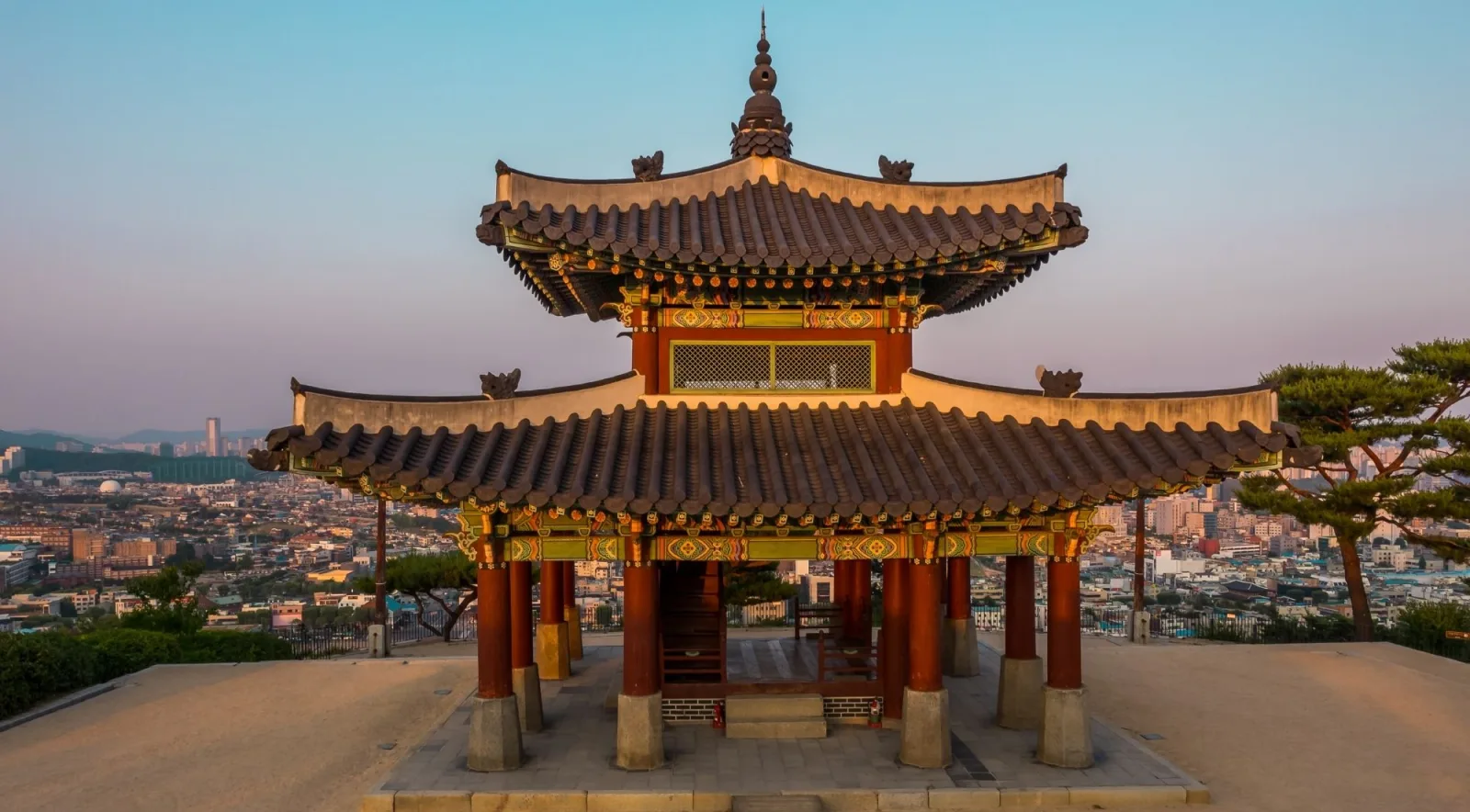
Stop 2: Seojangdae Command Post
At the top of Paldalsan, visit Seojangdae. This western command post is one of the best viewpoints on the fortress. From here you can look across modern Suwon and see how the historic walls sit within the city, and it is one of the best places to understand the strategic purpose of the higher western section.
Allow around 15 to 25 minutes for the viewpoint and photographs.
Stop 3: Follow the Wall Towards Hwaseomun
From Seojangdae, continue along the wall towards Hwaseomun Gate. This section gradually brings you down from the hill and gives you a good sense of the fortress as a continuous defensive system, not a collection of isolated monuments.
Hwaseomun is the western gate and one of the most photogenic parts of the route. The gate structure, the curved barbican wall in front of it and the surrounding defences make it a place to stop, not simply pass through.
Stop 4: Hwaseomun Gate
Spend around 15 to 20 minutes around Hwaseomun. This is a natural point for a break, because you have completed the hardest climbing section. From here the route towards Janganmun becomes easier.
If you are tired, this is also a good point to shorten the day. You can leave the wall and continue by taxi or local bus.
Stop 5: Walk to Janganmun Gate
Continue north-east along the fortress towards Janganmun, one of the largest and most impressive gates at Hwaseong. It has a substantial stone base, a wooden pavilion above and a defensive curved wall in front. For first-time visitors this is one of the must-see structures.
Allow 20 to 30 minutes around the gate. If architecture interests you, this is a good place to slow down and look at the defensive layout instead of only taking a front-facing photo.
Stop 6: Continue to Hwahongmun
From Janganmun, keep following the wall towards Hwahongmun. This is one of the most scenic transitions on the route.
Hwahongmun differs from the major land gates because it was built where the Suwoncheon stream passes through the fortress. The water flows beneath a row of stone arches, so the structure combined defence with water management.
Allow around 15 to 20 minutes.
Stop 7: Banghwasuryujeong Pavilion
Just beyond Hwahongmun is Banghwasuryujeong, one of the most attractive spots anywhere on the fortress. The pavilion sits above the surrounding water and landscape and feels more scenic than military today.
It is a good place to finish your main walking route. Allow around 20 to 30 minutes, especially if photography matters to you. Late afternoon can be particularly attractive here.
Where to Go After Banghwasuryujeong
From here you have several choices.
Option 1: Return towards Haenggung-dong
The best choice if you want cafés, shops and food after the walk.
Option 2: Continue along the eastern wall
If you still have energy, continue towards Changnyongmun Gate and the eastern side of the fortress.
Option 3: Finish and return to Suwon Station
Take a local bus or taxi back towards Suwon Station. Do not feel that you need to complete the entire fortress just because you started walking it.
Shorter 2-Hour Hwaseong Walking Route
If you only have a couple of hours, use this simpler route:
Janganmun → Hwahongmun → Banghwasuryujeong → Haenggung-dong
It avoids Paldalsan and focuses on the flatter, more scenic northern section. It is a good choice for:
- families;
- older travellers;
- hot summer days;
- short Seoul-to-Suwon trips.
Half-Day Walking Route
For a half-day visit, use:
Hwaseong Haenggung → Paldalsan → Seojangdae → Hwaseomun → Janganmun → Hwahongmun
Allow roughly 3 to 4 hours. This gives you the core historical and architectural highlights without needing a full day.
Full-Day Self-Guided Route
If Hwaseong is the main purpose of your day, expand the route. A good full-day plan is:
- Hwaseong Haenggung Palace
- Paldalsan
- Seojangdae
- Hwaseomun
- Janganmun
- Hwahongmun
- Banghwasuryujeong
- Changnyongmun
- the eastern wall section
- Haenggung-dong
- Paldalmun Market
- Chicken Street
This works well if you arrive in Suwon in the morning and return to Seoul after dinner. Our things to do in Suwon guide covers the stops beyond the wall.
Can You Walk the Entire Hwaseong Fortress?
Yes. The fortress wall is around 5.7 kilometres long, and a complete circuit is possible.
The true walking time depends on much more than the distance, though. You need to factor in:
- stairs;
- uphill sections;
- photo stops;
- gates and pavilions;
- palace time;
- food and breaks.
A full circuit can therefore take several hours. If you enjoy walking, it is rewarding. If your goal is to see the best of Hwaseong, the selected route above is more efficient.
Which Direction Should You Walk?
For most first-time visitors we recommend starting near Hwaseong Haenggung and tackling Paldalsan early, for two reasons.
First, the uphill section is easier when you are fresh. Second, you finish the day around the scenic northern and eastern sections instead of ending with a steep climb.
The opposite direction also works, but it can leave the hardest section until late in the day.
Is the Route Difficult?
Overall the route is moderate, not difficult. The main challenge is Paldalsan. The rest is a mixture of:
- paved paths;
- stairs;
- wall-top sections;
- flat city streets;
- gentle slopes.
Comfortable shoes are essential. You do not need hiking boots in normal weather, but sandals or slippery footwear are not ideal.
Is Hwaseong Fortress Wheelchair Accessible?
Some parts of the fortress district are accessible, but the full wall route is not suitable for wheelchairs because of:
- stairs;
- slopes;
- narrow wall sections;
- uneven surfaces.
Visitors with limited mobility should focus on the flatter areas around:
- Hwaseong Haenggung;
- Janganmun;
- Hwahongmun;
- parts of Haenggung-dong.
It is better to move between selected sights by taxi or accessible transport than to attempt a continuous wall walk.
Best Time of Day for the Walk
Morning
Best for cooler temperatures, quieter paths, summer visits and clear photography.
Midday
Fine in spring and autumn, but it can be uncomfortable in hot summer weather.
Late afternoon
Excellent for softer light and photography, especially around Hwahongmun and Banghwasuryujeong.
Evening
Good for the illuminated walls and the atmosphere, but not ideal if you want to visit the palace and the other daytime attractions. The walls themselves are open around the clock; Hwaseong Haenggung opens in the evening only during its seasonal night opening, which runs on Fridays, Saturdays, Sundays and public holidays from May to early November (in 2026, from 1 May to 1 November, 18:00 to 21:30). If you would rather have the evening walk organised and driven for you, our Hwaseong Fortress night tours page compares the options.
Best Season for Walking Hwaseong
Spring
One of the easiest seasons for a long walk. Temperatures are generally comfortable and the fortress area looks attractive with seasonal flowers.
Summer
Possible, but heat and humidity can make the exposed wall tiring. Start early and carry water.
Autumn
Arguably the best season for a long fortress walk. The weather is usually more comfortable and Paldalsan can be particularly attractive with autumn foliage.
Winter
Clear days can give excellent views, but exposed sections of the wall can feel very cold. Watch for slippery surfaces after snow or ice.
What to Bring
For a normal self-guided walk, bring:
- comfortable walking shoes;
- water;
- sun protection;
- a phone with maps;
- a portable charger;
- light layers in spring or autumn;
- gloves and warm outerwear in winter.
You do not need specialised hiking equipment.
Should You Use Google Maps?
Google Maps can be less useful in South Korea than in many other countries. Many travellers prefer Korean mapping apps such as Naver Map and KakaoMap, which give more detailed local walking and transit information.
Before starting, save the names of the main stops so you can check your position as you go.
Self-Guided or Guided Walking Tour?
A self-guided route is ideal if you want flexibility. Choose self-guided if you:
- like photography;
- want to stop in cafés;
- prefer your own pace;
- do not want a fixed schedule.
Choose a guided tour if you:
- want the historical context explained;
- are especially interested in King Jeongjo and the fortress design;
- prefer a structured itinerary;
- do not want to navigate.
The architecture means more when you understand why the gates, towers and command posts were built. So even if you walk independently, it helps to read some history first. If you decide on a guide, From Seoul: Suwon Hwaseong Fortress Tour is the fortress-focused departure: around four hours including Hwaseong Haenggung, with transport from central Seoul, rated 4.9 out of 5 from more than 140 reviews, from $52 (our breakdown →). Our guided vs self-guided comparison weighs the two ways of visiting in full.
Best Route for Photography
If photography is your priority, focus on:
- Seojangdae for views;
- Hwaseomun for gate architecture;
- Janganmun for scale;
- Hwahongmun for water and arches;
- Banghwasuryujeong for the most scenic composition.
Late afternoon generally gives you more attractive light than the middle of the day.
Best Route for Families
Families should not feel pressured to walk the entire fortress. A better route is:
Janganmun → Hwahongmun → Banghwasuryujeong → Haenggung-dong
It is shorter and avoids the steepest climb. Add Hwaseong Haenggung Palace if the children are interested in royal history.
Best Route for Older Travellers
Use taxis between the major sights if necessary. A good low-strain itinerary is:
- Hwaseong Haenggung Palace;
- taxi to Janganmun;
- a short walk to Hwahongmun;
- Banghwasuryujeong;
- taxi or bus back.
You can still see several of the most important structures without tackling Paldalsan.
Can You Do the Walk in Rain?
Yes, but it is less enjoyable. The fortress is mainly outdoors, and the stone steps can become slippery.
Light rain is manageable with:
- waterproof shoes;
- an umbrella or rain jacket;
- a slower pace.
In heavy rain, focus on shorter sections and on indoor or covered attractions.
Where to Eat After the Walk
After finishing the fortress, consider:
- Haenggung-dong for cafés and casual restaurants;
- Paldalmun Market for local atmosphere;
- Suwon Chicken Street for fried chicken.
If you complete the route in late afternoon, dinner in the historic centre is an easy way to finish the day before heading back to Seoul.
How to Get Back to Suwon Station
From the historic fortress area, the easiest options are a local bus or a taxi. Do not assume the best plan is to walk all the way back to Suwon Station: after several hours on the fortress, saving your legs is usually the right call. Our Seoul to Hwaseong Fortress page has the bus numbers and the train options for the journey home.
Frequently Asked Questions
How long does it take to walk Hwaseong Fortress?
A selected route takes around 3 to 4 hours with stops. A full circuit can take considerably longer, depending on pace, climbing and sightseeing.
How long is Hwaseong Fortress?
The wall is approximately 5.7 kilometres long.
Is the Hwaseong Fortress walk free?
Yes. The fortress walls are free to walk and open around the clock. Hwaseong Haenggung Palace charges separate admission, at ₩2,000 for adults.
Do I need a guide for the Hwaseong Fortress walk?
No. The route is easy enough to walk independently, but a guide can add useful historical context.
Is the Hwaseong Fortress walk difficult?
Most of it is easy to moderate, but Paldalsan includes steeper sections and stairs.
Can I walk Hwaseong Fortress with children?
Yes. Families may prefer a shorter route around Janganmun, Hwahongmun and Banghwasuryujeong.
What is the best part of Hwaseong Fortress?
For a first visit, the strongest combination is Seojangdae, Hwaseomun, Janganmun, Hwahongmun and Banghwasuryujeong.
Best Self-Guided Route for Most Visitors
If you want one route to follow, use this:
Hwaseong Haenggung → Paldalsan → Seojangdae → Hwaseomun → Janganmun → Hwahongmun → Banghwasuryujeong
It gives you the best balance of history, views, architecture and scenery. Do not worry about completing every section of the wall. Hwaseong is more enjoyable when you stop, look around and understand what you are seeing than when you count kilometres.
For transport from Seoul, see our Seoul to Hwaseong Fortress guide. For the wider historical context, read the complete Hwaseong Fortress guide. Still deciding whether to book a guide at all? Our guided vs self-guided page settles it.
Walk a UNESCO Fortress Wall Before Dinner in Seoul
Suwon Hwaseong is 30 kilometres from central Seoul and open year-round. Compare guided day trips with transport, Haenggung Palace and the Korean Folk Village included — free cancellation on most departures.
Check Availability & Book