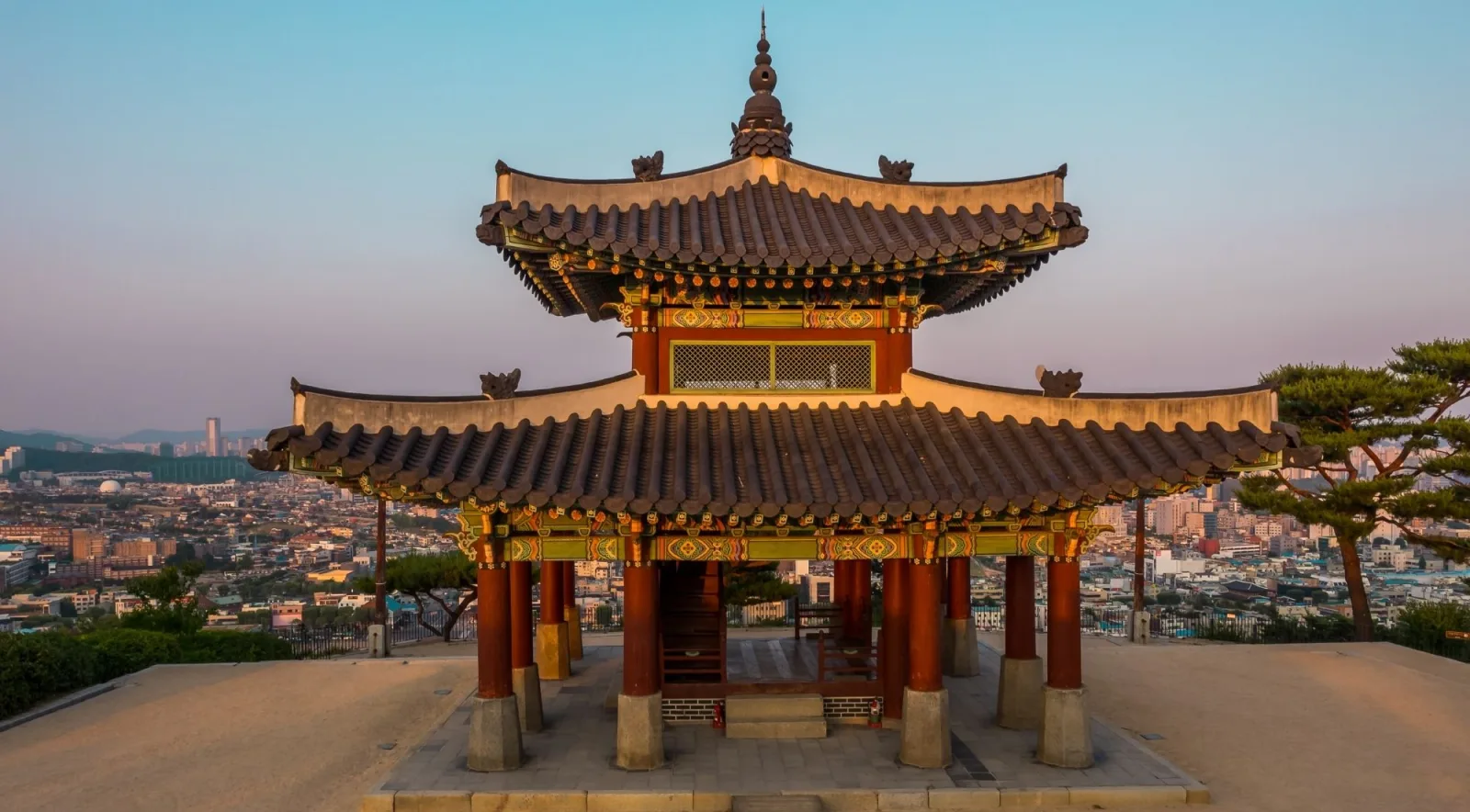
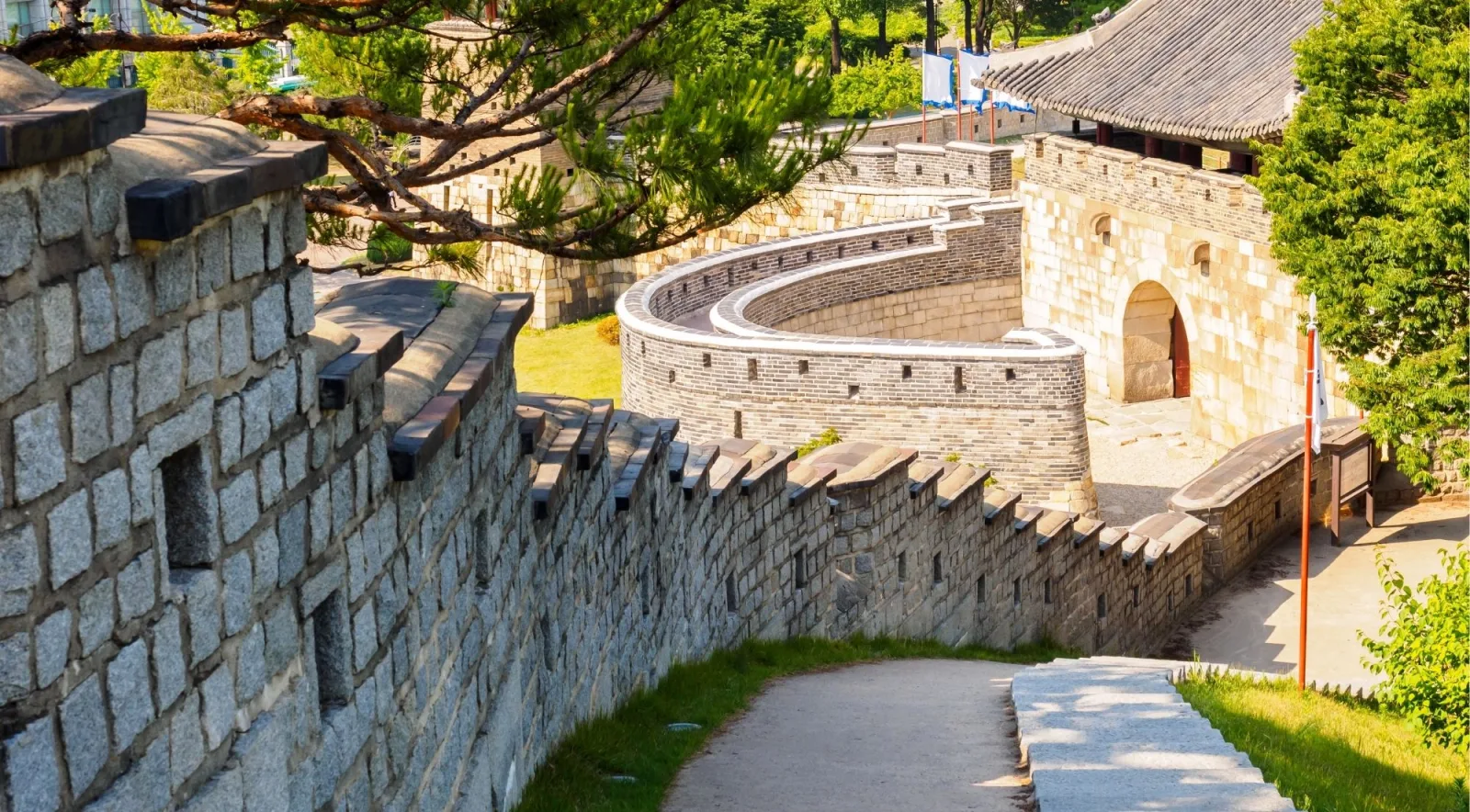
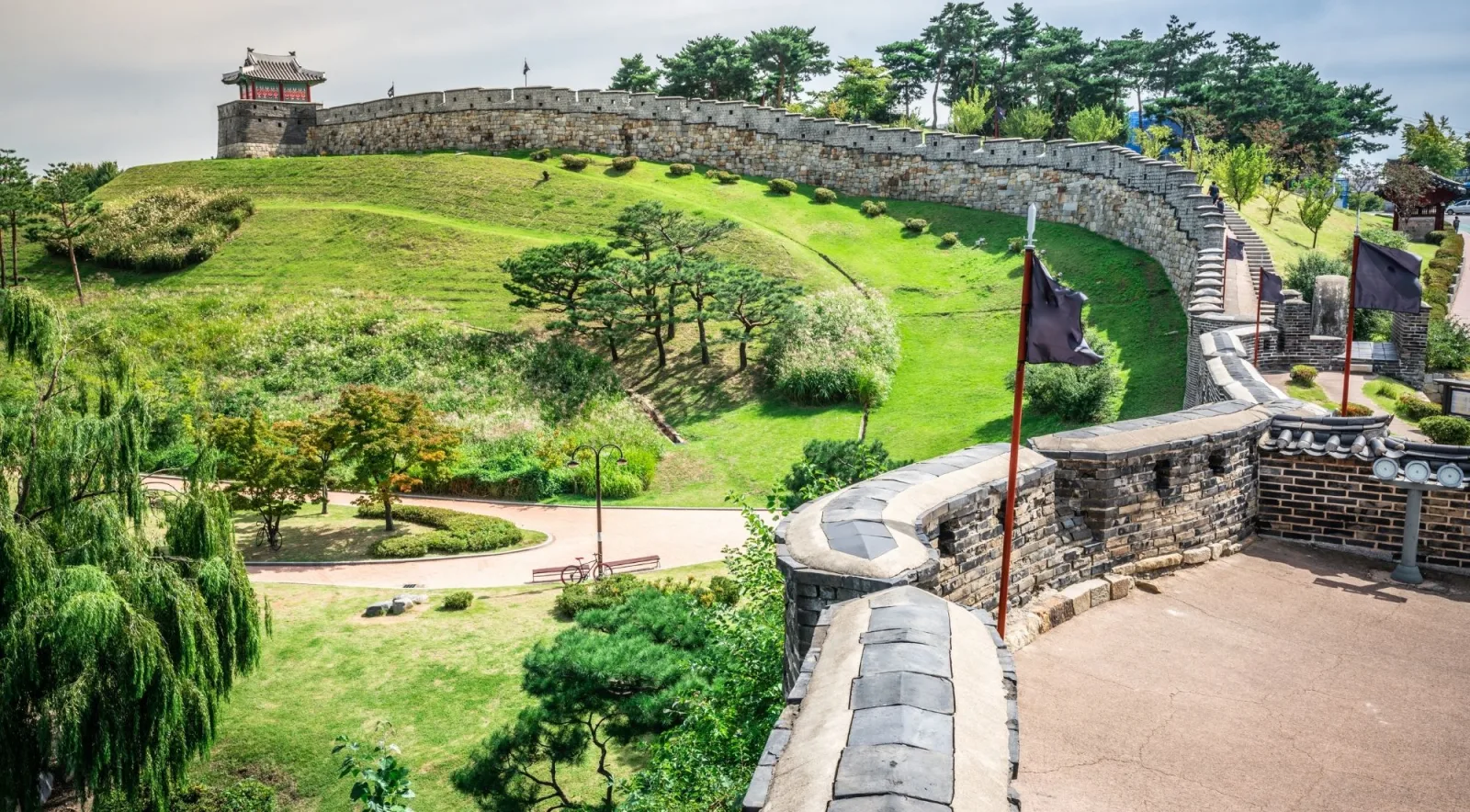
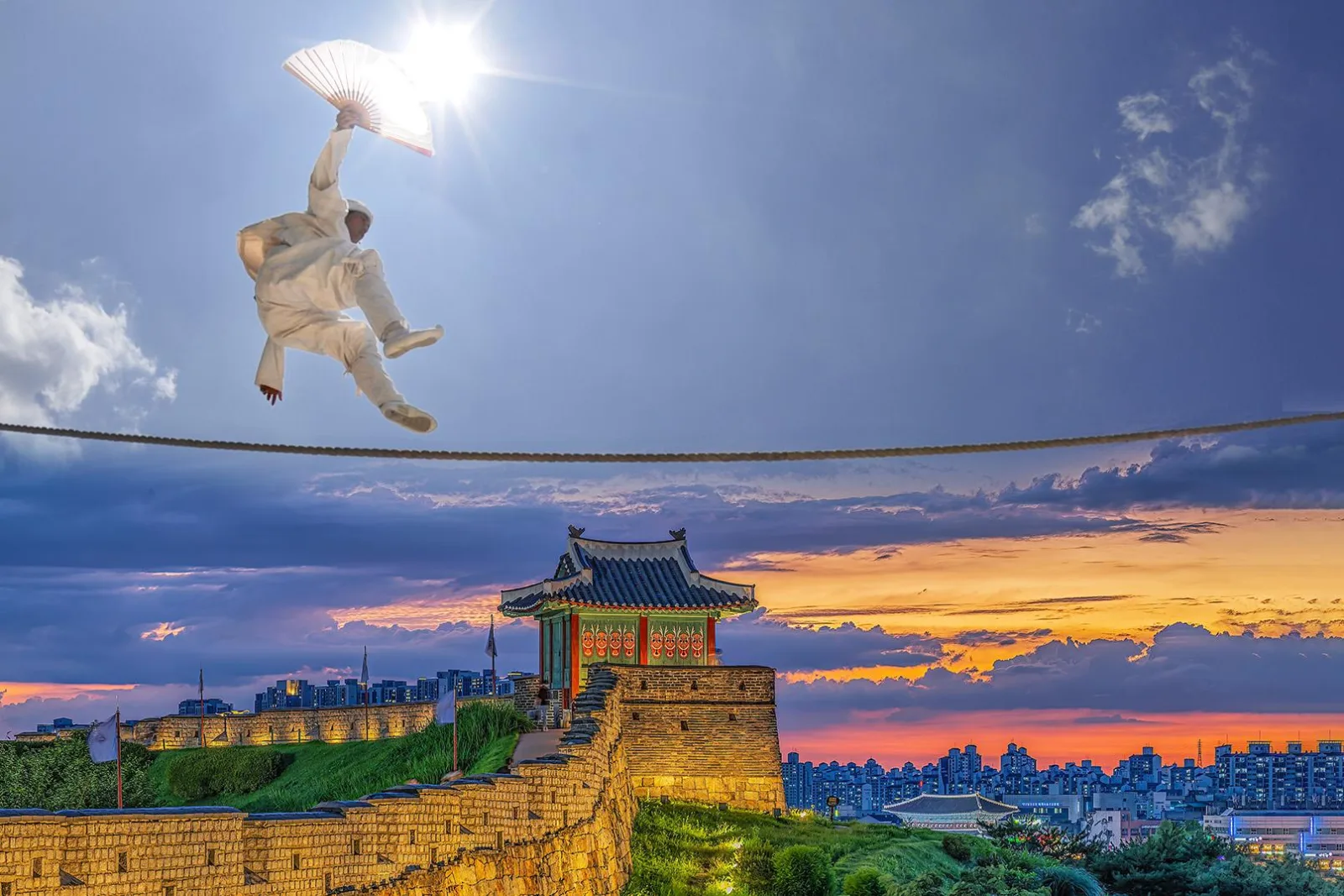
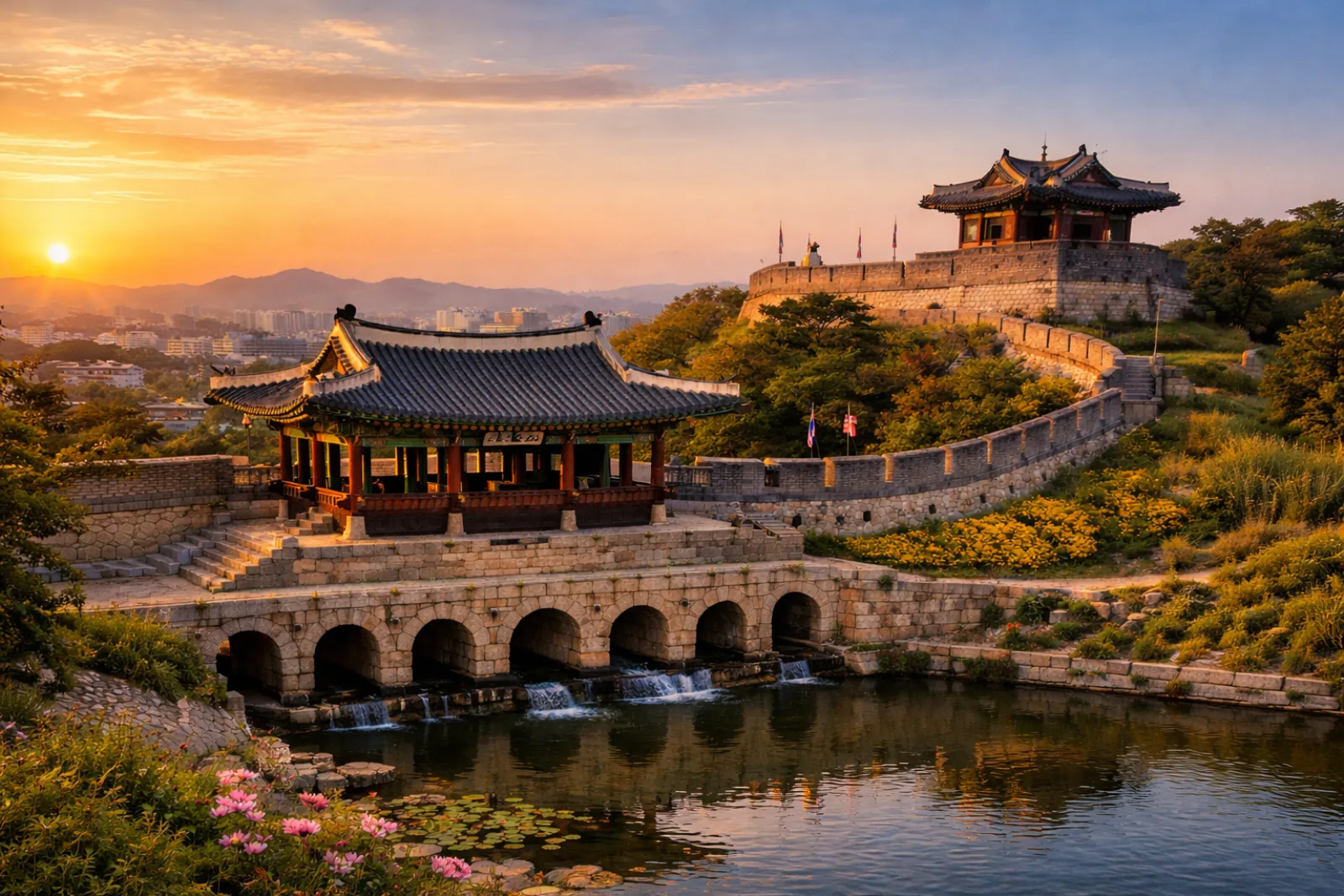
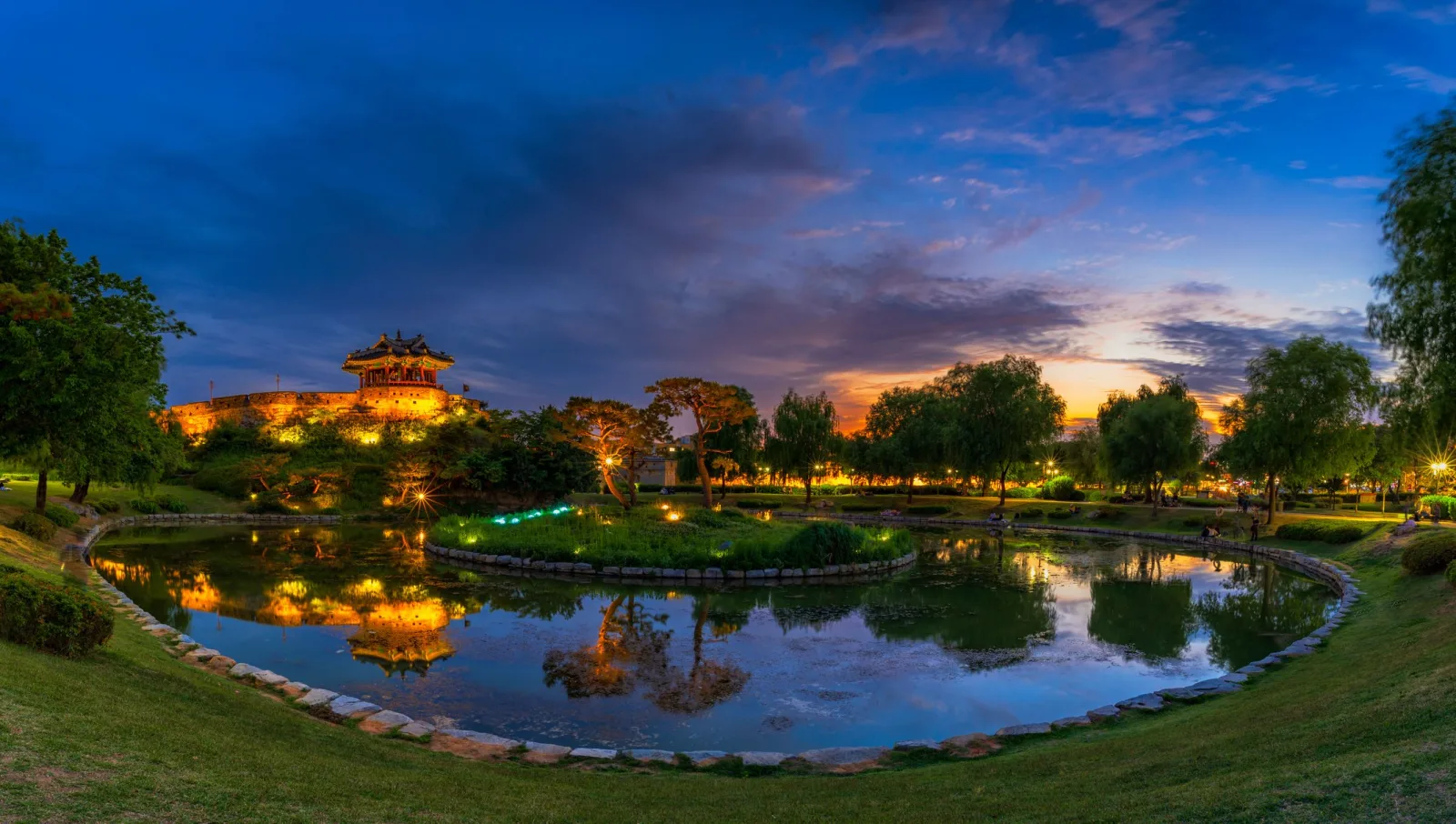
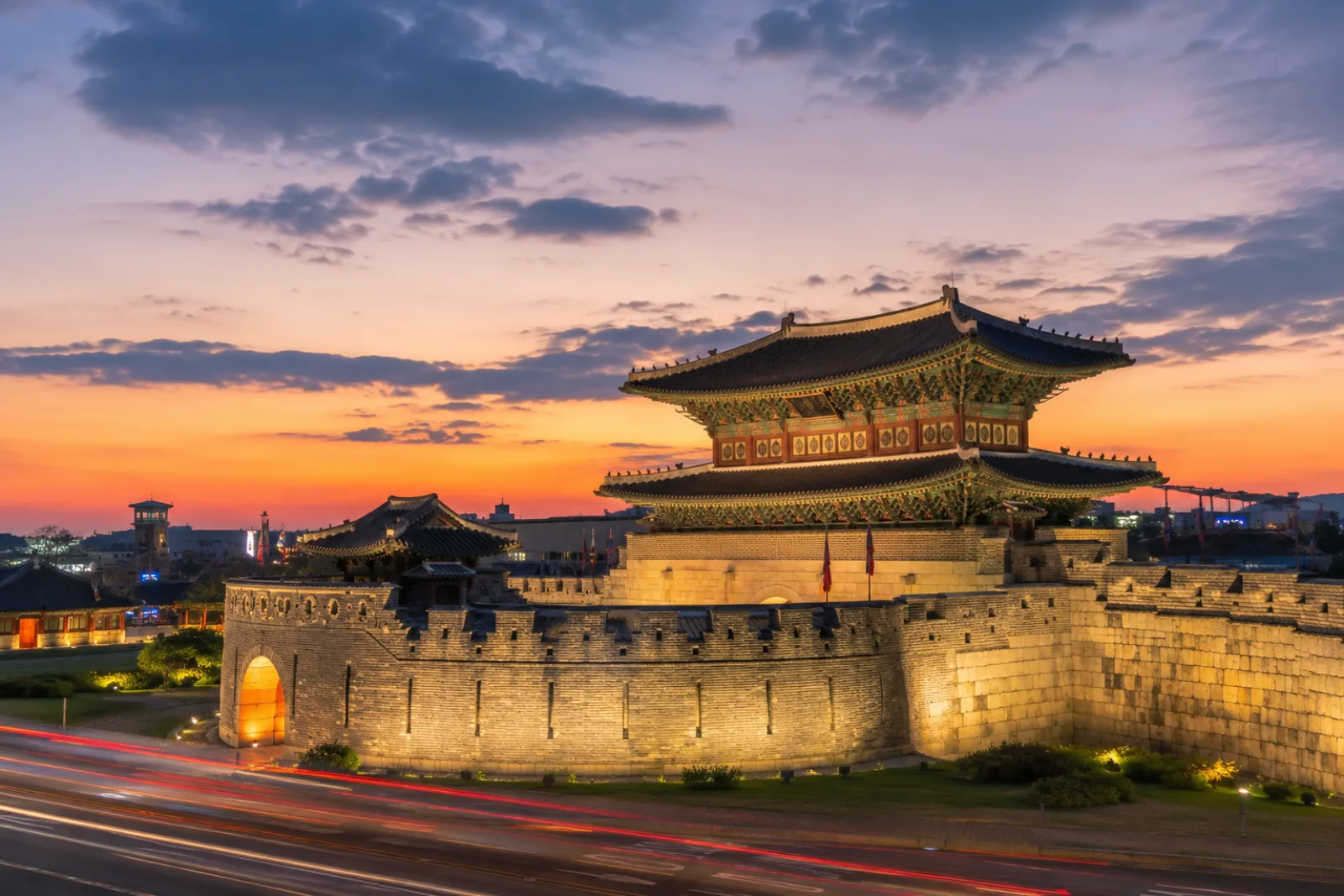
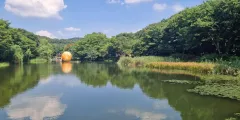
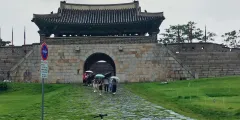
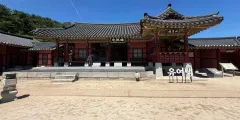
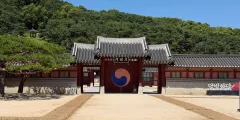
Suwon Hwaseong is the rare UNESCO World Heritage Site you can walk into for nothing. The fortress wall — 5.7 kilometres of it, running over two hills and through the middle of a city of a million people — is open around the clock and costs nothing to walk. That single fact reshapes the whole question of how to visit, because what you are actually choosing between is not tickets. It is transport, time and interpretation.
What Suwon Hwaseong actually is
King Jeongjo built it between 1794 and 1796. The official story is filial piety: he had moved his father’s grave to the foot of Paldalsan and wanted a walled town beside it. The unofficial one is that he was building a second capital, far enough from the factional politics of Seoul to govern from, and the scale of the thing supports him.
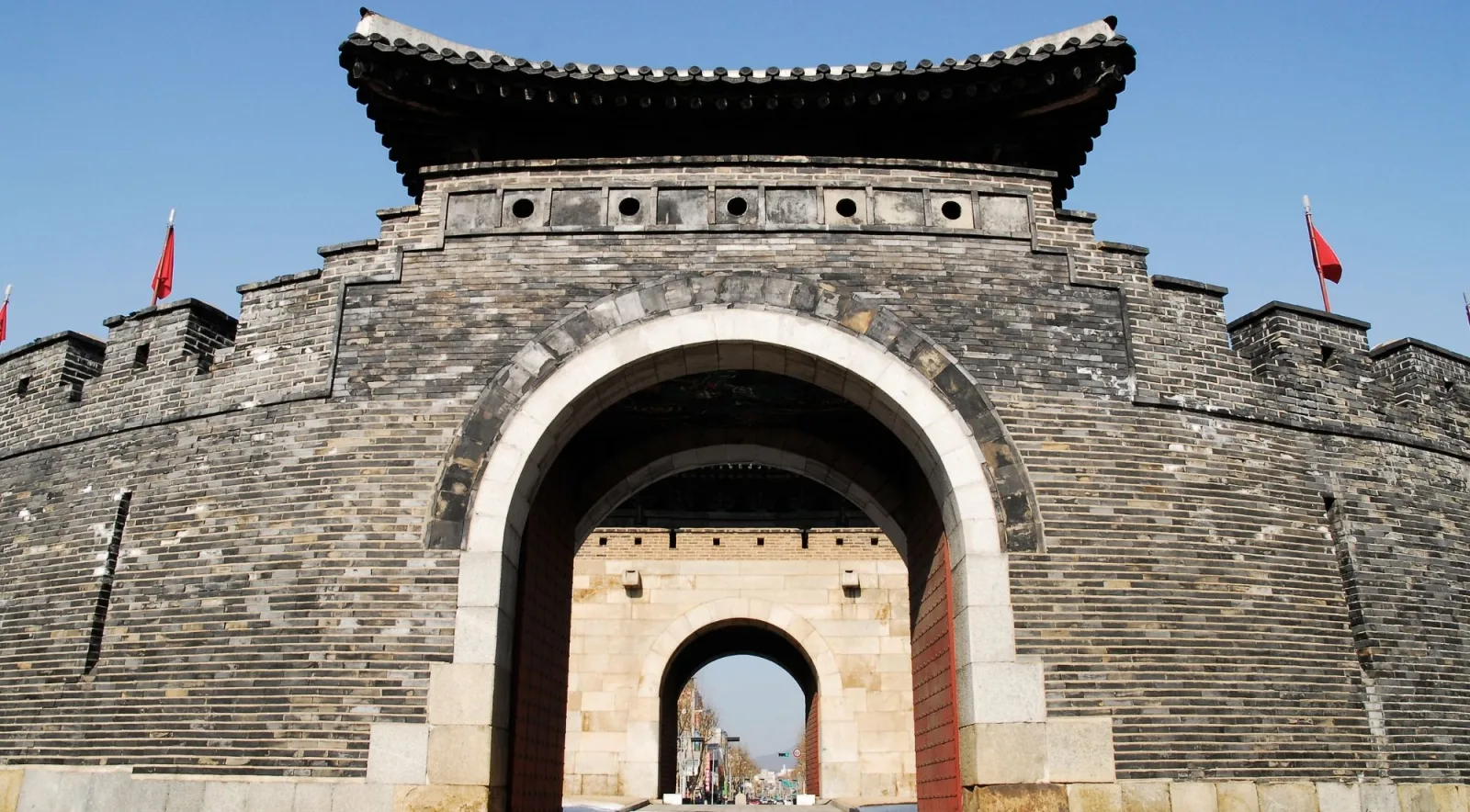
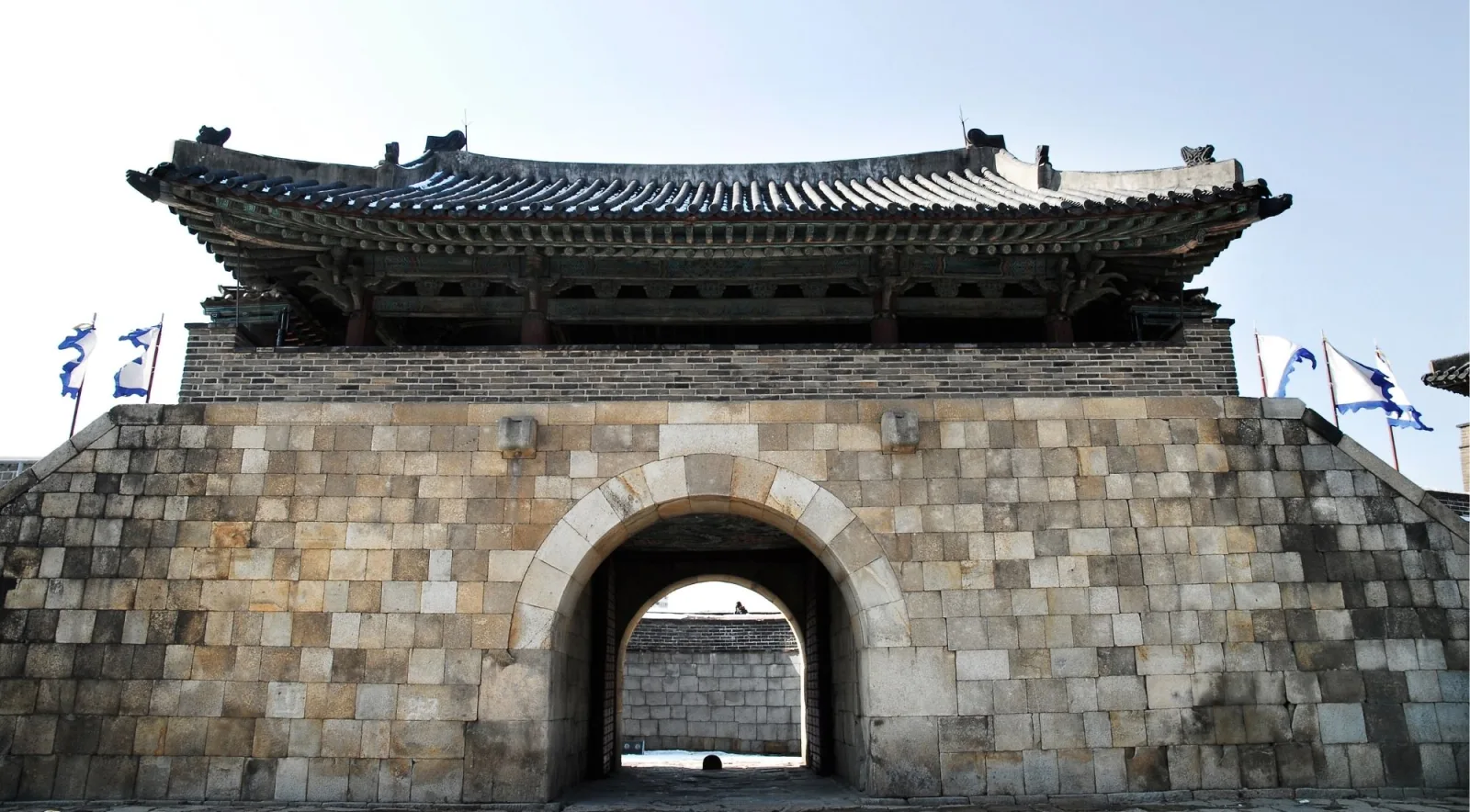
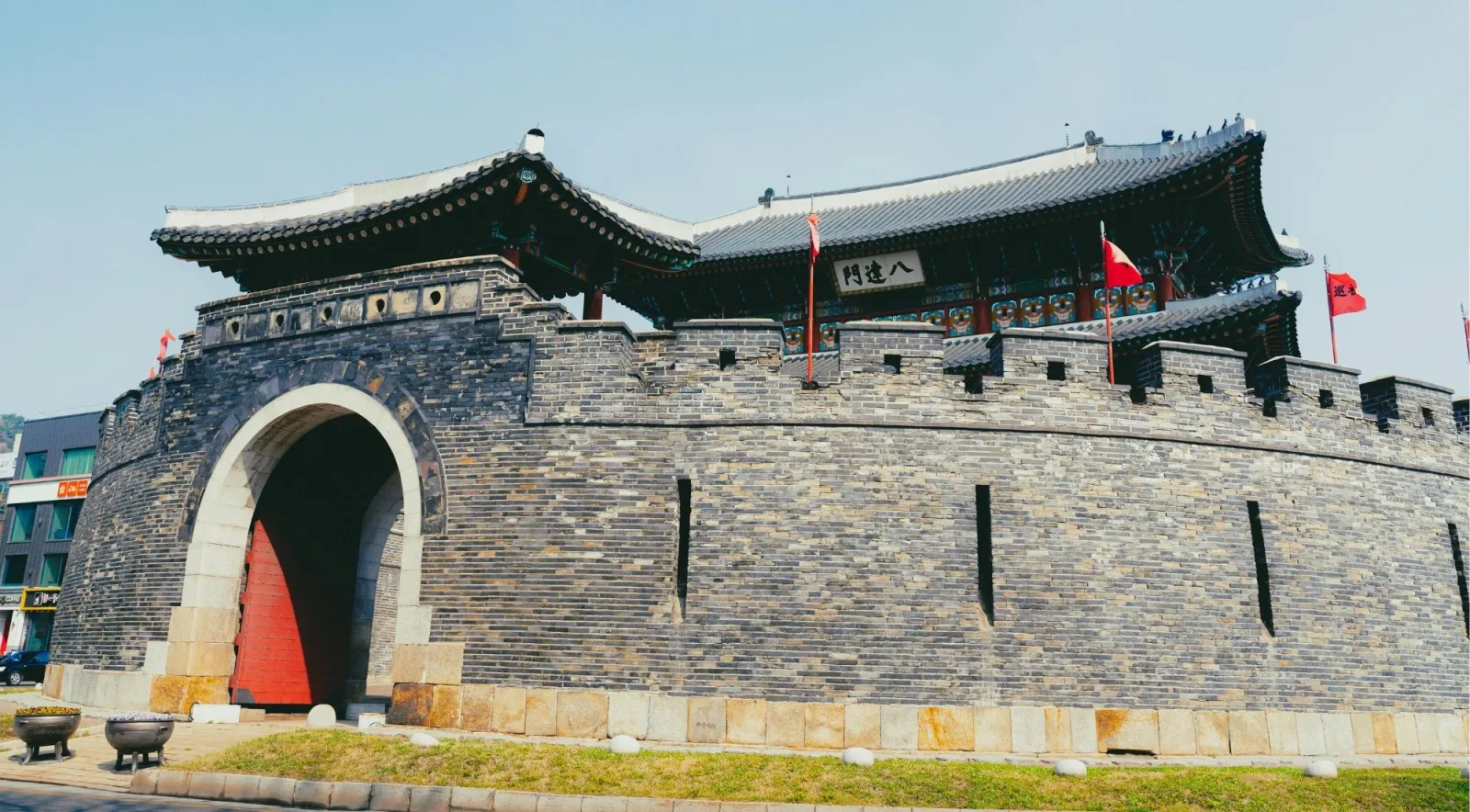
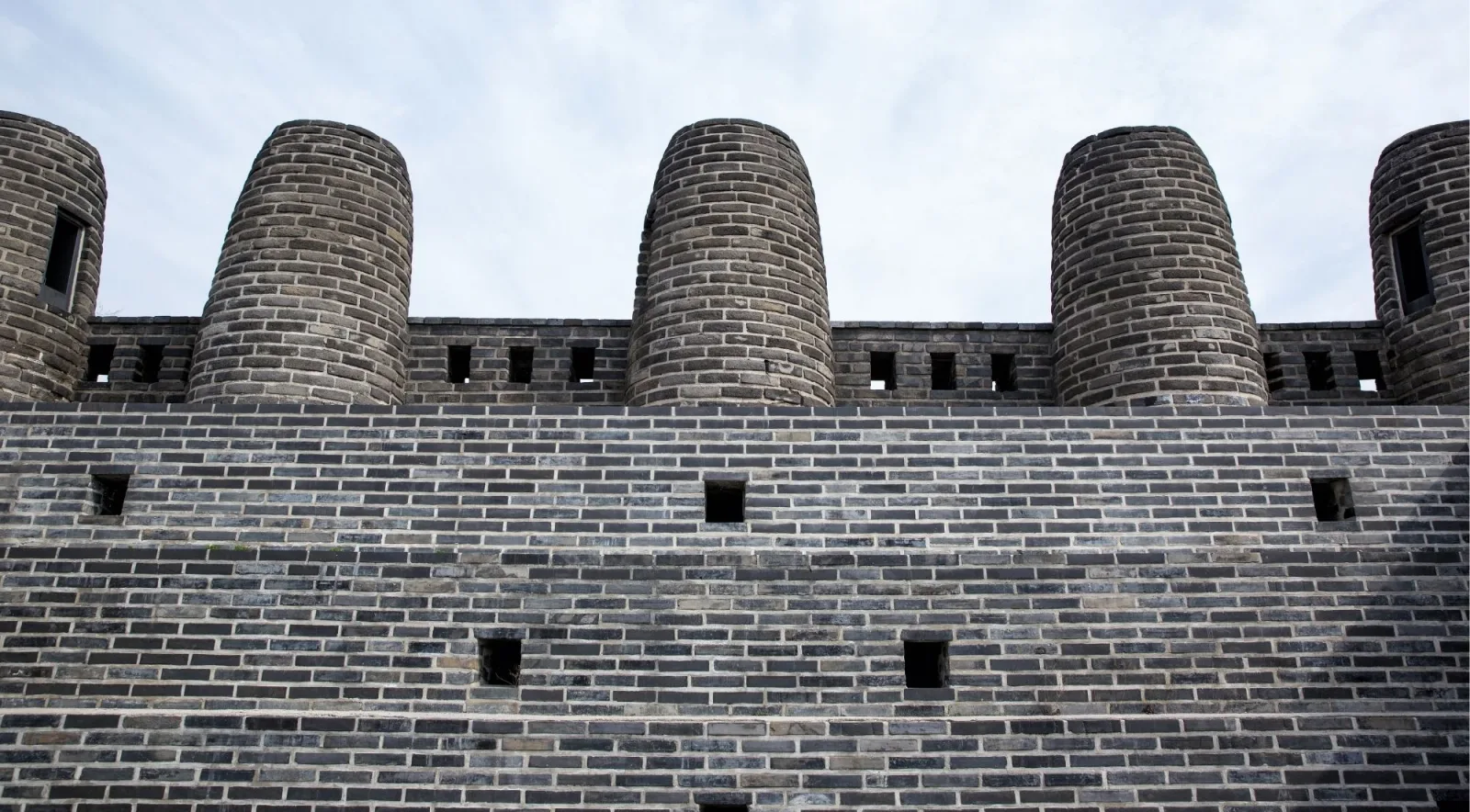
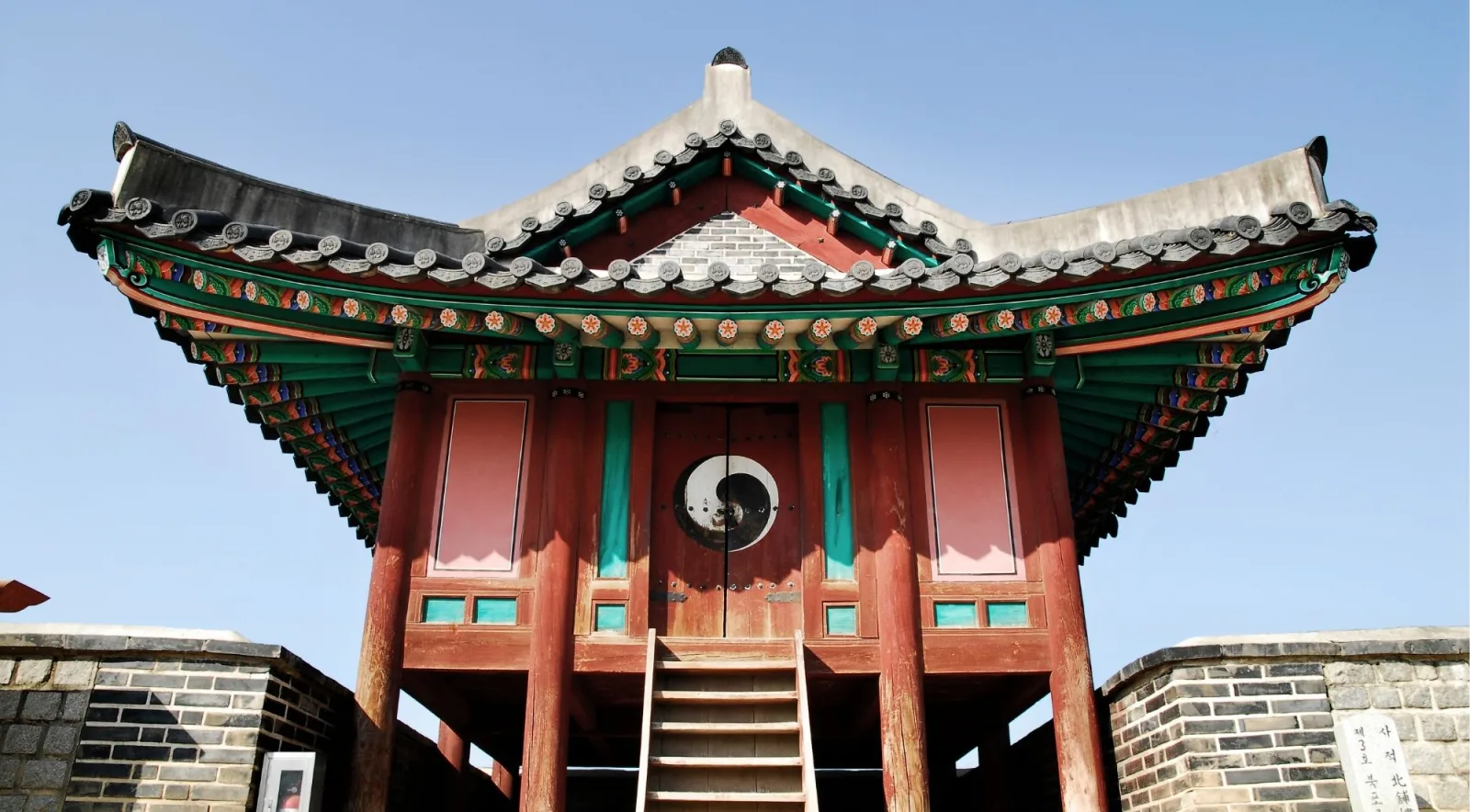
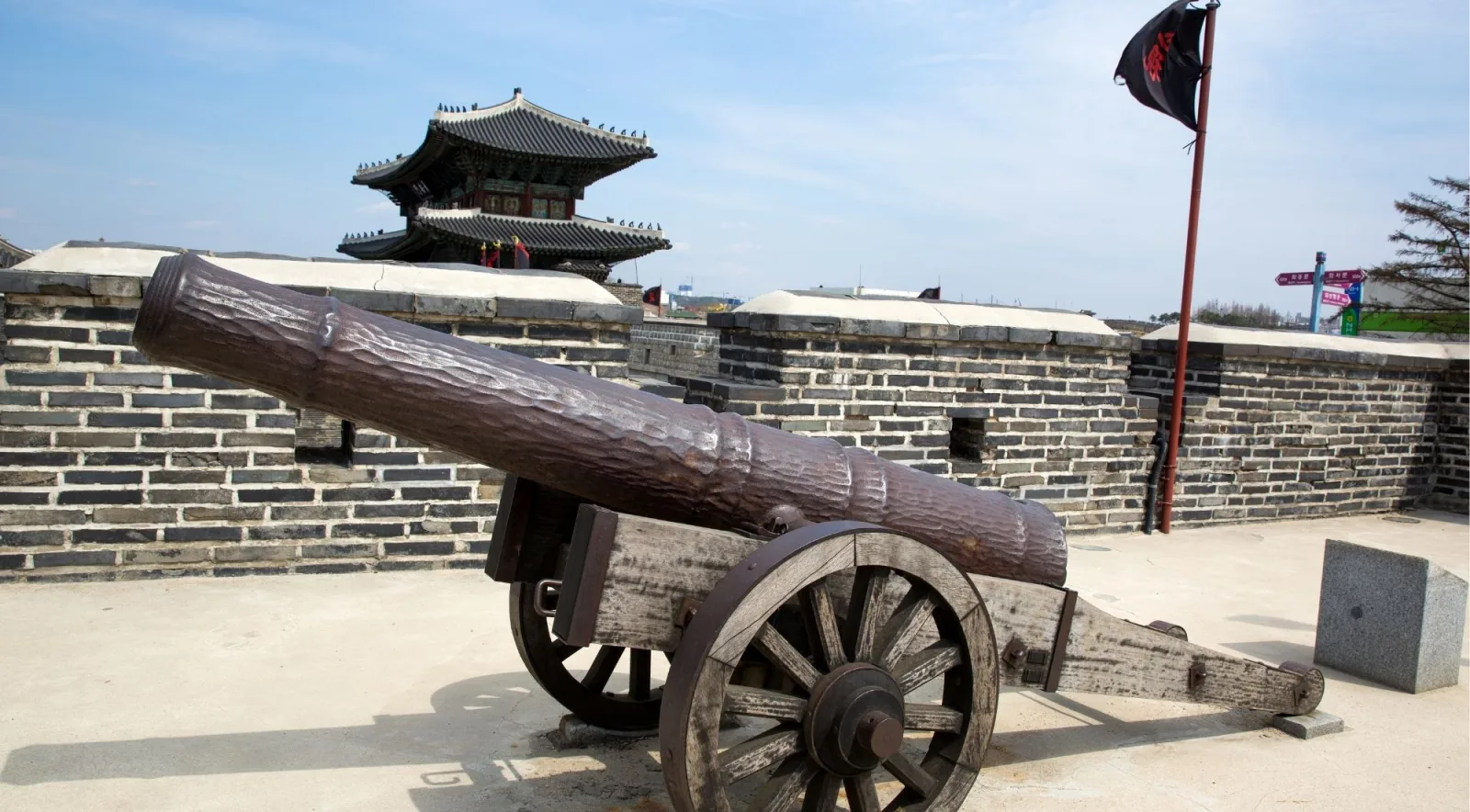
What makes it worth a day rather than a photograph is the engineering. Jeong Yak-yong — the same scholar exiled a few years later for his Catholic sympathies — designed a lifting crane and a pulley cart that let the works go up in two years and nine months instead of the projected ten. The wall carries firing ports angled three ways for firearms, a beacon tower with five chimneys for fire signals, floodgates over the Suwoncheon stream, and a barbican in front of each main gate. Almost uniquely for a Korean monument of its age, the whole build is documented: the Hwaseong Seongyeok Uigwe recorded every measurement, every material and every worker’s wage, which is why the reconstruction after the Korean War could be faithful rather than approximate.
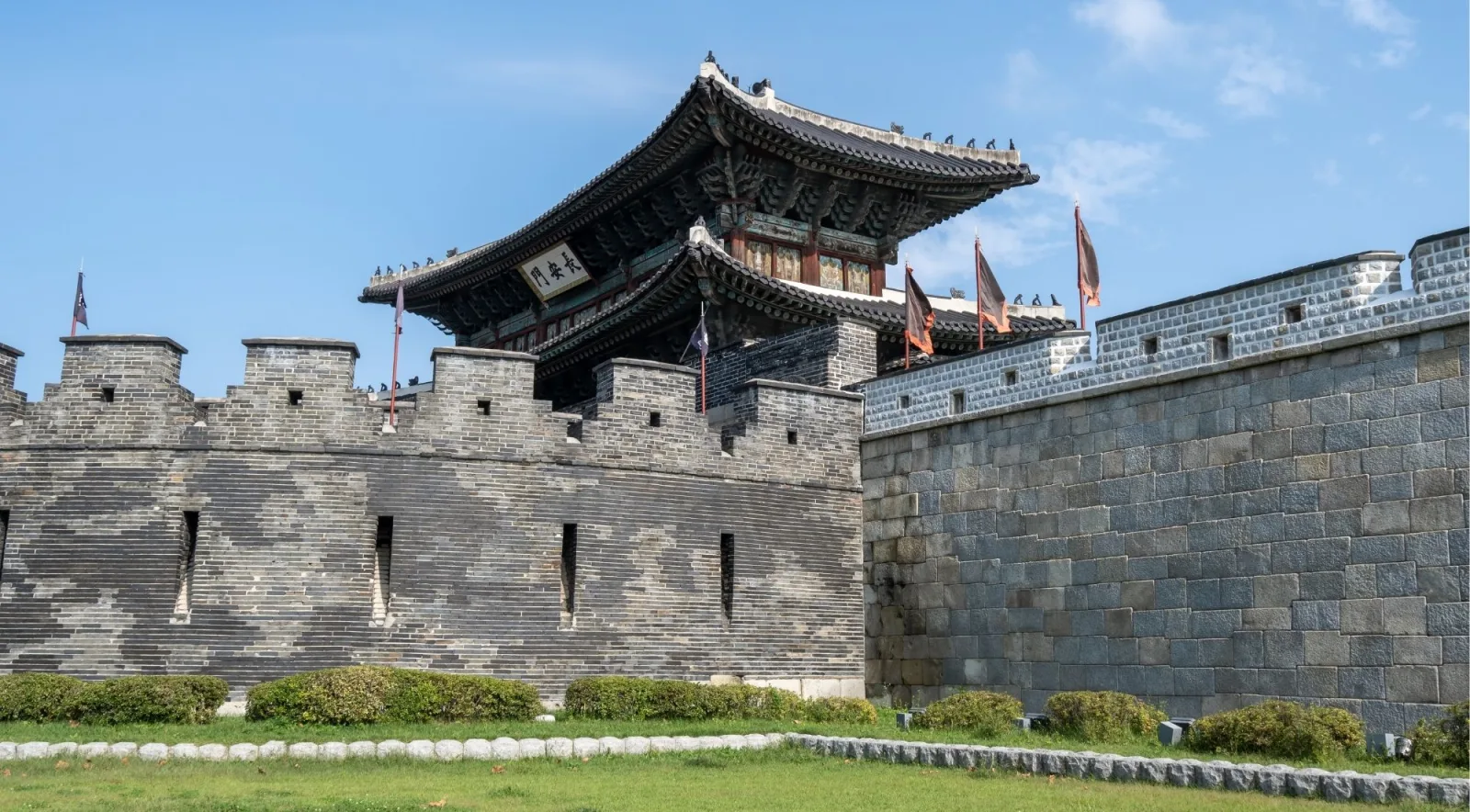
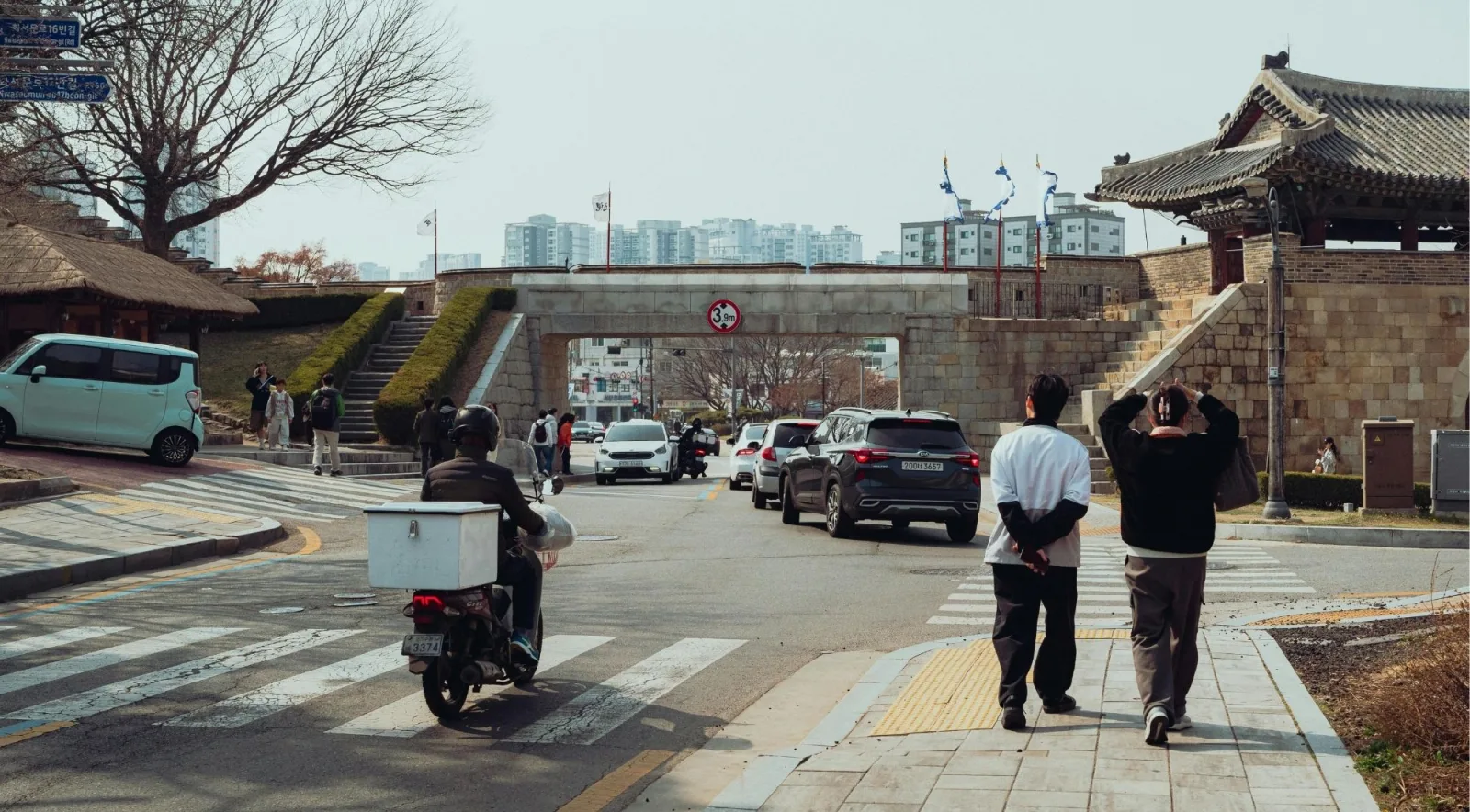
Four main gates anchor the circuit — Janganmun to the north, Paldalmun to the south, Changnyongmun east and Hwaseomun west. Janganmun is the largest surviving city gate in Korea, larger than anything in Seoul. Our complete Hwaseong Fortress guide goes through the gates, the command posts and Hwaseong Haenggung one by one (the palace has its own guide), and says how long each version of the visit takes.
Free to walk, but not free to reach
Suwon sits about 30 kilometres south of central Seoul. On your own that is Subway Line 1 to Suwon Station — roughly an hour from Seoul Station on the local service — and then a local bus (11, 13, 36 or 39) for another fifteen minutes to Paldalmun, where the wall begins. It is straightforward, it is cheap, and it eats the better part of three hours of your day in transit and transfers.
Inside the walls the only substantial paid attraction is Hwaseong Haenggung, the temporary royal palace, at ₩2,000 for adults. Our tickets and entrance fees guide sets out every fee on the site — the palace, the trolley, the archery range, the tethered balloon — and what each one is actually worth.
So a guided tour is not buying you entry. It is buying you a door-to-door vehicle from Myeongdong or Hongdae, a guide who can tell you what the gun ports are for, and — on the full-day itineraries — a second attraction bundled at a price you could not assemble yourself. That last point is the strongest commercial argument on this site: admission to the Korean Folk Village is ₩22,000 for foreign visitors who show a passport (₩37,000 on weekdays and ₩39,000 at weekends at the standard adult rate), and several full-day tours include it, the fortress, the palace and the round trip for around $52–73 per person, which saves you two transfers on top of the ticket.
Which shape of day suits you
- A half-day covers the fortress and Haenggung Palace and gets you back to Seoul by mid-afternoon. Around four hours; the right call if Suwon is one item on a busy Seoul itinerary. Our guide to how long you need at Hwaseong Fortress has two-hour and full-day versions too.
- A full day adds a second destination — most often the Korean Folk Village, sometimes Starfield Suwon’s library atrium or Gwangmyeong Cave. Nine to eleven hours, and the best value per hour.
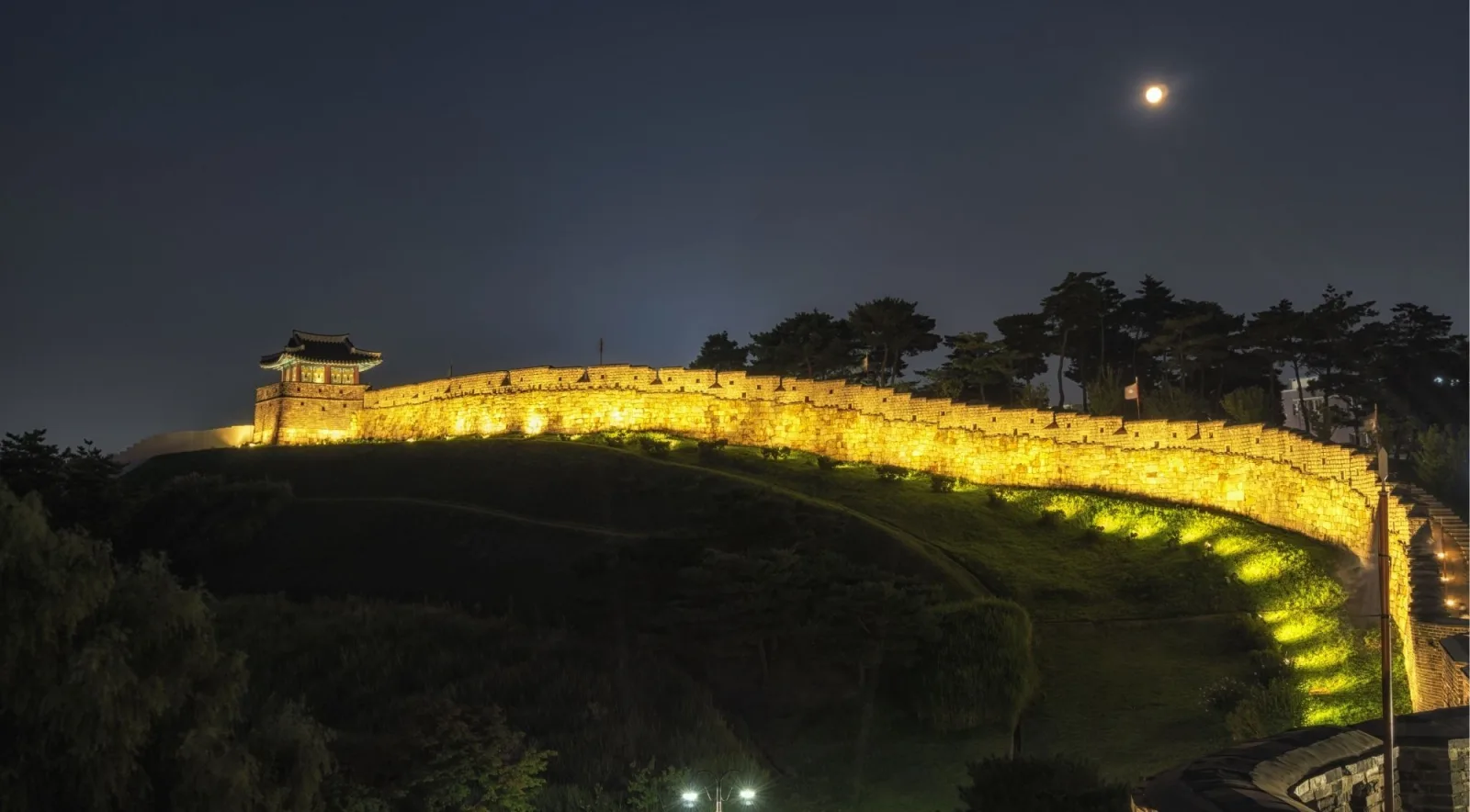
- A night tour trades daylight for floodlit walls and empty ramparts. Four hours, and the version of Hwaseong most day-trippers never see. See Hwaseong Fortress night tours.
- A private tour puts a licensed guide and a vehicle at your disposal, collects you from your hotel and bends the schedule around you. See private Hwaseong Fortress tours.
If you would rather have this decided for you than decide it yourself, our guide to which Hwaseong Fortress tour to book walks through the same catalogue by traveller type rather than by product. If you have not yet decided whether to book anything at all, how to visit Suwon in one day plans the independent version hour by hour. Once you are in Suwon, our self-guided walking route plans the fortress itself stop by stop, our Suwon one-day itinerary times the whole day from the palace to dinner, and guided tour or self-guided visit? settles the question most people start with.
The four departures worth knowing by name
From Seoul: Suwon Hwaseong Fortress Tour is the exact-match product and the highest-rated of the high-volume departures — half-day or full-day, with the Korean Folk Village on the longer version (our breakdown →).
Suwon Hwaseong, Gwangmyeong Cave & Starfield Library gives the ramparts more time than any other multi-stop day — 90 minutes on the walls plus a full hour at Haenggung (our breakdown →).
Suwon Full-Day Trip to UNESCO Fortress & Trendy Spots is the most-booked Suwon day trip on the site, pairing the fortress with Starfield Library and Waujeongsa Temple (our breakdown →).
From Seoul: Suwon Hwaseong Fortress Night Tour is the only dedicated evening departure — four hours to the floodlit walls and back (our breakdown →).
Suwon as a day, not a stop
The most-booked itineraries on this site treat Suwon as a city rather than a single monument, and that is a fair reading of the place. Starfield Suwon’s Byeolmadang Library — a four-storey open bookshelf atrium — has become one of the most photographed interiors in Korea. Hangnidan-gil, the café strip near the station, is where young Seoulites actually go on a Saturday. Tongdak Alley behind Paldalmun sells the whole fried chicken Suwon is domestically famous for. And the Korean Folk Village, thirty minutes east in Yongin, is a 240-acre open-air museum of relocated Joseon-era buildings with a live performance schedule.
The natural route through all of it — Seoul to Suwon, fortress to palace to Korean Folk Village or Starfield — is exactly the shape most of the guided day trips take, which is why they compare well against doing it alone. If you are unsure about the second stop, read is the Korean Folk Village worth adding before you book, or our Korean Folk Village vs Hwaseong Fortress comparison if you only have time for one. Suwon day trips from Seoul covers the broader itineraries; how to get to Hwaseong Fortress from Seoul compares the train-and-bus route against a guided day, hour for hour and won for won; and things to do in Suwon ranks eighteen of them, from the ramparts to Chicken Street, by what is worth your afternoon.
When to go
The wall is exposed on both hills, and Korean summers are genuinely hot and humid — several operators shift their departures into the late afternoon from June to August for exactly this reason. Spring cherry blossom along the Suwoncheon and the fireworks-lit weekends of the autumn Suwon Hwaseong Cultural Festival are the two peaks worth planning around. Winter is cold and clear, the crowds thin out, and the light on the stone is the best of the year.
Whichever you pick, check live availability before you commit to a date — the group departures fill first on weekends and through the autumn festival.